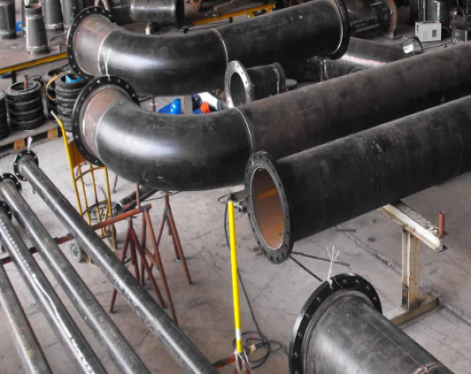
Boiler tubes are critical pressure-bearing components in thermal power plants, industrial boilers, petrochemical heating furnaces, and waste heat recovery systems, operating under high temperature and high pressure (even alternating loads) conditions for extended periods. To ensure safety and lifespan, the selection of materials, dimensional tolerances, manufacturing processes, and inspection methods for boiler tubes must be incorporated into a rigorous standard system.
In international engineering practice, ASTM (American Society for Testing and Materials)/ASME (American Society of Mechanical Engineers, BPVC) standards are the most widely referenced boiler tube specification system. The ASME SA-xxx series specifically refers to the "specification version" after the corresponding ASTM clauses were incorporated into ASME Boiler & Pressure Vessel Code (BPVC) Section II, and is commonly used in statutory design documents for pressure vessels and boilers.
Typical applications include:
Power plants
Petrochemical facilities
Refineries
Waste heat recovery boilers
Industrial steam systems
Superheaters and reheaters
Because operating conditions vary significantly, manufacturers produce boiler tubes in different material grades to meet specific temperature and pressure requirements.
The most commonly used specifications include:
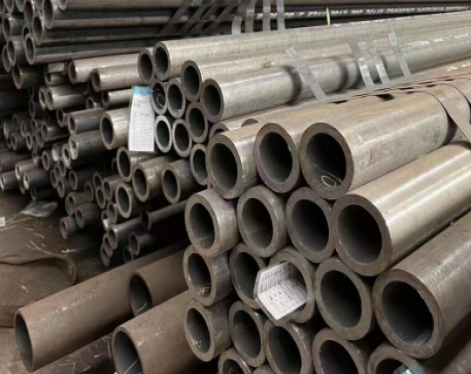
The ASTM A335 pipe for high-temperature operation is a smooth ferritic alloy-steel pipe. The pipe ordered in compliance with this specification is suitable for bending, flanging (vanstoning), and related shaping and fusion welding operations.
EN10216-2
These Seamless steel tubes are used for pressure purposes. Steel tubes, non-alloy, and alloy, with defined elevated temperature properties.
DIN 17175
DIN 17175 seamless boiler tubes are widely used in applications such as in petroleum, boiler industry, heat conservation, chemical fibre, chemical industry, medicine, machinery, paper, mechanical equipment, refrigeration, food, energy, water, aerospace, transportation, aviation, maritime, shipbuilding, environmental protection, and boiler heat exchanger tubes.
JIS G3462
They are is usually used in heat exchangers, boilers, petroleum, chemical engineering, and other power regions end up being commonly used for higher temperature resistance or corrosion capability.
ASTM A179/ A179M,ASME SA-179/SA-179M:Standard Specification for Seamless Cold-Drawn Low-Carbon Steel Heat-Exchanger and Condenser Tubes
ASTM A192/ A192M,ASME SA-192/SA-192M:Standard Specification for Seamless Carbon Steel Boiler Tubes for High-Pressure Service
ASTM A209/ A209M,ASME SA-209/SA-209M:Standard Specification for Seamless Carbon-Molybdenum Alloy-Steel Boiler and Superheater Tubes
ASTM A210/ A210M,ASME SA-210/SA-210M:Standard Specification for Seamless Medium-Carbon Steel Boiler and Superheater Tubes
ASTM A213/ A213M,ASME SA-213/SA-213M:Standard Specification for Seamless Ferritic and Austenitic Alloy-Steel Boiler, Superheater, and Heat-Exchanger Tubes
ASTM A335/A335M, ASME SA-335/SA-335M:Standard Specification for Seamless Ferritic Alloy-Steel Pipe For High-Temperature Service
ASTM A556/A556M, ASME SA-556/SA-556M: Standard Specification for Seamless Cold-Drawn Carbon Steel Feedwater Heater Tubes
BS 3059: Steel Boiler and Super Heater Tubes
Manufacturing Method: Electric-Resistance Welded, lower cost than seamless tubes.
Main Grades: Grade A (low carbon), Grade C (higher strength carbon steel), Grade D (C-Mn, more stringent).
Applications: Low/medium pressure boiler tube bundles, flue tubes, smoke boxes, and certain safety ends – not the first choice for high-pressure seamless water-cooled walls/superheaters.
2. ASTM A179 / ASME SA-179 – Cold-Drawn Seamless Low Carbon Steel Heat Exchanger Tubes
Positioning: Prioritized for heat exchangers and condensers, not "main boiler pressure-bearing components".
Key Chemical Composition Points: C 0.06–0.18%, Mn 0.27–0.63%, strict control of P/S to ensure reliability of expansion joints/bending.
Mechanical properties (typical): Tensile strength ≥ 325 MPa, Yield strength ≥ 180 MPa, HRB ≤ 72.
Why it's important: Low carbon content and good annealing structure make U-shaped bends less prone to cracking, making it a classic material for shell-and-tube heat exchangers.
3. ASTM A192 / ASME SA-192 — High-Pressure Seamless Carbon Steel Boiler Tubes (One of the most essential carbon steel boiler tubes)
Positioning: Seamless carbon steel tubes for high-pressure boilers, used in water-cooled walls, economizers, low-temperature superheaters, etc.
Size range: Outer diameter approx. 1/2″–7″ (12.7–177.8 mm), wall thickness approx. 0.085–1.000″.
Key limitations: Still carbon steel; long-term service metal temperature should generally not exceed ≈500 ℃; higher temperatures require upgrading to alloy steel (A213 T series).
Required inspections: Chemical composition, tensile testing, flattening, flaring, hydrostatic testing, or non-destructive testing (NDE).
4. ASTM A209 / ASME SA-209 — Carbon-Molybdenum (C-Mo) Alloy Steel Boiler Tubes
Representative grades: T1 / T1a / T1b
The role of Mo: Improves high-temperature strength and creep resistance, while also improving high-temperature relaxation behavior, suitable for boiler superheater sections that are "hotter" than A192 but still do not require full Cr-Mo ferrite.
5. ASTM A210 / ASME SA-210 — Medium-carbon seamless boiler and superheater tubes
Two main grades: Grade A-1 (more commonly used) and Grade C (higher strength, but relatively more sensitive to weldability).
Typical properties: A-1 tensile strength ≥ 415 MPa, yield strength ≥ 255 MPa; Grade C tensile strength ≥ 485 MPa, yield strength ≥ 275 MPa.
Application focus: Superheater tubes, areas with higher temperature/stress in boiler heat transfer surfaces; "stronger but more demanding" compared to A192.
6. ASTM A213 / ASME SA-213 — Ferritic & Austenitic Alloy Steel Boiler Tubes (The Main Battlefield of High-Temperature Alloys)
This is an unavoidable standard after boilers are upgraded to high parameters (high temperature/high pressure), and it is also the family with the most grades.
In summary, the ASTM boiler tube system is not just a "material list," but a ladder from carbon steel → C-Mo → Cr-Mo → high-Cr alloys/stainless steel: each step corresponds to higher high-temperature strength, oxidation resistance, and structural stability.
The four pillars most frequently encountered in practice are: A178 (ERW economical tube) / A192 (high-pressure seamless carbon steel) / A210 (medium-carbon seamless steel) / A213 (alloy steel high-temperature), plus the A335 P series connected to the piping.
Truly reliable selection always comes down to three things: operating metal temperature, design pressure/cyclic load, and media corrosivity—then let the standards and allowable stress curves "check" for you.
In international engineering practice, ASTM (American Society for Testing and Materials)/ASME (American Society of Mechanical Engineers, BPVC) standards are the most widely referenced boiler tube specification system. The ASME SA-xxx series specifically refers to the "specification version" after the corresponding ASTM clauses were incorporated into ASME Boiler & Pressure Vessel Code (BPVC) Section II, and is commonly used in statutory design documents for pressure vessels and boilers.
What Is a Boiler Tube?
A boiler tube is a seamless or welded steel tube used for transferring heat and carrying water or steam within a boiler system.Typical applications include:
Power plants
Petrochemical facilities
Refineries
Waste heat recovery boilers
Industrial steam systems
Superheaters and reheaters
Because operating conditions vary significantly, manufacturers produce boiler tubes in different material grades to meet specific temperature and pressure requirements.
Understanding ASTM and ASME Boiler Tube Standards
ASTM standards establish manufacturing and material requirements, while the ASME Boiler and Pressure Vessel Code defines allowable stresses and operating temperature limits.The most commonly used specifications include:
| Standard | Description |
| ASTM A178 / ASME SA178 | Electric-resistance welded carbon steel boiler tubes |
| ASTM A179 | Seamless cold-drawn low-carbon steel tubes |
| ASTM A192 | High-pressure seamless carbon steel boiler tubes |
| ASTM A209 | Carbon-molybdenum alloy steel boiler tubes |
| ASTM A210 | Medium-carbon seamless boiler tubes |
| ASTM A213 | Alloy steel and stainless steel boiler tubes |
What are the different grades of Alloy Steel Boiler Tubes?
ASTM A335The ASTM A335 pipe for high-temperature operation is a smooth ferritic alloy-steel pipe. The pipe ordered in compliance with this specification is suitable for bending, flanging (vanstoning), and related shaping and fusion welding operations.
EN10216-2
These Seamless steel tubes are used for pressure purposes. Steel tubes, non-alloy, and alloy, with defined elevated temperature properties.
DIN 17175
DIN 17175 seamless boiler tubes are widely used in applications such as in petroleum, boiler industry, heat conservation, chemical fibre, chemical industry, medicine, machinery, paper, mechanical equipment, refrigeration, food, energy, water, aerospace, transportation, aviation, maritime, shipbuilding, environmental protection, and boiler heat exchanger tubes.
JIS G3462
They are is usually used in heat exchangers, boilers, petroleum, chemical engineering, and other power regions end up being commonly used for higher temperature resistance or corrosion capability.
ASTM Boiler Tube Grade Comparison Table
Choosing the right boiler tube grade depends on temperature, pressure, and application. The table below compares the most commonly used ASTM boiler tube grades to help in quick selection:| Grade | Temperature Rating | Pressure Class | Typical Application | Standard |
| ASTM A179 | Low | Medium | Heat exchangers, condensers | ASTM |
| ASTM A192 | High | High | High-pressure boilers | ASTM |
| ASTM A210 | Medium–High | High | Superheaters, boiler systems | ASTM |
| ASTM A213 T11 | High | High | Power plants, heat exchangers | ASTM A213 |
| ASTM A213 T22 | Very High | High | Boilers, petrochemical plants | ASTM A213 |
| ASTM A213 T91 | Extreme | Very High | Supercritical power plants | ASTM A213 |
| ASTM A213 T92 | Ultra-High | Very High | Advanced ultra-supercritical plants | ASTM A213 |
ASTM A179/ A179M,ASME SA-179/SA-179M:Standard Specification for Seamless Cold-Drawn Low-Carbon Steel Heat-Exchanger and Condenser Tubes
ASTM A192/ A192M,ASME SA-192/SA-192M:Standard Specification for Seamless Carbon Steel Boiler Tubes for High-Pressure Service
ASTM A209/ A209M,ASME SA-209/SA-209M:Standard Specification for Seamless Carbon-Molybdenum Alloy-Steel Boiler and Superheater Tubes
ASTM A210/ A210M,ASME SA-210/SA-210M:Standard Specification for Seamless Medium-Carbon Steel Boiler and Superheater Tubes
ASTM A213/ A213M,ASME SA-213/SA-213M:Standard Specification for Seamless Ferritic and Austenitic Alloy-Steel Boiler, Superheater, and Heat-Exchanger Tubes
ASTM A335/A335M, ASME SA-335/SA-335M:Standard Specification for Seamless Ferritic Alloy-Steel Pipe For High-Temperature Service
ASTM A556/A556M, ASME SA-556/SA-556M: Standard Specification for Seamless Cold-Drawn Carbon Steel Feedwater Heater Tubes
BS 3059: Steel Boiler and Super Heater Tubes
Material of Boiler Tube
ASTM/ASME A179,A192, A178 GR.C, A210 A-C, 10#, 20G, 20mnG, 25MnG, 19Mn5, ST45.8-III, ASTM/ASME A213 (T2, T9,T11,T12,T22,T91), ASTM/ASME A335 (P1, P2, P5, P9, P11, P12, P22, P91, P92), ASTM A200 T5, 16Mn, Q345A, Q345B, Q345C, Q345D, Q345E, 15CrMoG, 12CrMo, 15CrMo,13CrMo44, 10CrMo910, 12CrMo195, X12CrMo91, 12Cr2Mo, 1Cr5Mo, 15Mo3, 12Cr1MoVG, 12Cr2MoWVTiB,10Cr9Mo1VNbDetailed breakdown of boiler tube material grades
1. ASTM A178 / ASME SA-178 – ERW Welded Boiler Tubes (Economical Choice)Manufacturing Method: Electric-Resistance Welded, lower cost than seamless tubes.
Main Grades: Grade A (low carbon), Grade C (higher strength carbon steel), Grade D (C-Mn, more stringent).
Applications: Low/medium pressure boiler tube bundles, flue tubes, smoke boxes, and certain safety ends – not the first choice for high-pressure seamless water-cooled walls/superheaters.
2. ASTM A179 / ASME SA-179 – Cold-Drawn Seamless Low Carbon Steel Heat Exchanger Tubes
Positioning: Prioritized for heat exchangers and condensers, not "main boiler pressure-bearing components".
Key Chemical Composition Points: C 0.06–0.18%, Mn 0.27–0.63%, strict control of P/S to ensure reliability of expansion joints/bending.
Mechanical properties (typical): Tensile strength ≥ 325 MPa, Yield strength ≥ 180 MPa, HRB ≤ 72.
Why it's important: Low carbon content and good annealing structure make U-shaped bends less prone to cracking, making it a classic material for shell-and-tube heat exchangers.
3. ASTM A192 / ASME SA-192 — High-Pressure Seamless Carbon Steel Boiler Tubes (One of the most essential carbon steel boiler tubes)
Positioning: Seamless carbon steel tubes for high-pressure boilers, used in water-cooled walls, economizers, low-temperature superheaters, etc.
Size range: Outer diameter approx. 1/2″–7″ (12.7–177.8 mm), wall thickness approx. 0.085–1.000″.
Key limitations: Still carbon steel; long-term service metal temperature should generally not exceed ≈500 ℃; higher temperatures require upgrading to alloy steel (A213 T series).
Required inspections: Chemical composition, tensile testing, flattening, flaring, hydrostatic testing, or non-destructive testing (NDE).
4. ASTM A209 / ASME SA-209 — Carbon-Molybdenum (C-Mo) Alloy Steel Boiler Tubes
Representative grades: T1 / T1a / T1b
The role of Mo: Improves high-temperature strength and creep resistance, while also improving high-temperature relaxation behavior, suitable for boiler superheater sections that are "hotter" than A192 but still do not require full Cr-Mo ferrite.
5. ASTM A210 / ASME SA-210 — Medium-carbon seamless boiler and superheater tubes
Two main grades: Grade A-1 (more commonly used) and Grade C (higher strength, but relatively more sensitive to weldability).
Typical properties: A-1 tensile strength ≥ 415 MPa, yield strength ≥ 255 MPa; Grade C tensile strength ≥ 485 MPa, yield strength ≥ 275 MPa.
Application focus: Superheater tubes, areas with higher temperature/stress in boiler heat transfer surfaces; "stronger but more demanding" compared to A192.
6. ASTM A213 / ASME SA-213 — Ferritic & Austenitic Alloy Steel Boiler Tubes (The Main Battlefield of High-Temperature Alloys)
This is an unavoidable standard after boilers are upgraded to high parameters (high temperature/high pressure), and it is also the family with the most grades.
In summary, the ASTM boiler tube system is not just a "material list," but a ladder from carbon steel → C-Mo → Cr-Mo → high-Cr alloys/stainless steel: each step corresponds to higher high-temperature strength, oxidation resistance, and structural stability.
The four pillars most frequently encountered in practice are: A178 (ERW economical tube) / A192 (high-pressure seamless carbon steel) / A210 (medium-carbon seamless steel) / A213 (alloy steel high-temperature), plus the A335 P series connected to the piping.
Truly reliable selection always comes down to three things: operating metal temperature, design pressure/cyclic load, and media corrosivity—then let the standards and allowable stress curves "check" for you.