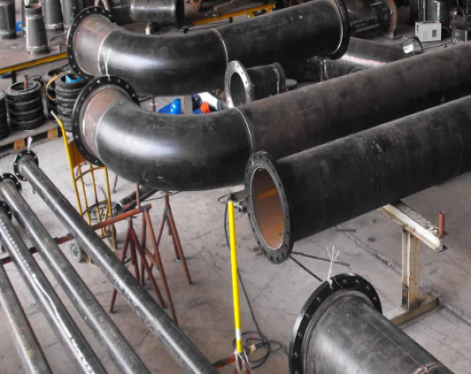
Precision seamless steel tubing is a high-precision steel pipe material manufactured through cold drawing or hot rolling processes. It holds a significant position in the industrial sector due to its exceptional dimensional accuracy and superior surface quality. Compared to ordinary seamless steel pipes, precision seamless steel tubing has stricter requirements in terms of dimensional control, surface finish, and mechanical properties. Its inner and outer diameter tolerances can typically be controlled within 0.2mm, and high-grade products can even reach ±0.05mm, while the inner wall roughness can be as low as Ra≤0.4μm. These high-precision characteristics make it a critical material for many precision equipment and complex mechanical systems.
Precision seamless steel pipes, depending on their intended use and performance requirements, are available in a wide variety of materials, which can be classified into major categories such as carbon steel, alloy steel, stainless steel, and other special alloy materials.
1. Carbon Steel
Carbon steel is one of the most common and cost-effective materials for precision seamless steel pipes, suitable for general mechanical structures and low-pressure fluid transportation.
Common grades include:
10#, 20#, 35#, 45# and other basic carbon steels
10# steel: Good toughness and excellent weldability, widely used in general mechanical structures.
20# steel: Medium strength, a general-purpose structural material.
35# and 45# steel: Possess higher strength and hardness, suitable for components subjected to higher stress.
In addition, there are other commonly used industrial carbon steels, such as Q235B and ST35, to meet different strength and processing requirements.
2. Alloy Steels
Alloy steels improve the strength, toughness, and heat resistance of steel pipes by adding specific elements (such as chromium, molybdenum, nickel, and manganese), and are commonly used under high mechanical loads or in special working conditions.
Common alloy steel grades include:
16Mn, 20Cr, 40Cr: Possessing good overall mechanical properties, widely used in the machinery manufacturing industry.
15CrMo, 20CrMo, 35CrMo, 42CrMo: Containing molybdenum and chromium elements, improving high-temperature strength and fatigue resistance.
These alloy steel precision tubes are mainly used in applications requiring high strength, good wear resistance, and strong impact load bearing capacity.
3. Stainless Steel
Stainless steel precision seamless steel pipes are particularly important in the chemical, food, pharmaceutical, and shipbuilding industries due to their excellent corrosion resistance and high-temperature performance.
Common stainless steel grades include:
304/304L: General-purpose stainless steel with good corrosion resistance and machinability;
316/316L: Offers stronger corrosion resistance than 304;
321, 310, 410, etc.: Used in high-temperature or more specialized environments.
The chemical composition, including elements such as chromium (Cr), nickel (Ni), and molybdenum (Mo), contributes to the superior corrosion and high-temperature resistance of stainless steel precision pipes.
4. Other Special Alloy Materials
Depending on the specific application requirements, precision seamless steel pipes may also utilize more advanced alloy materials, such as:
High-strength alloy steel: used for high-pressure boiler tubes or special load-bearing structures;
Duplex stainless steel and heat-resistant stainless steel: used in high-temperature and severely corrosive environments;
Titanium alloys, nickel-based alloys, etc.: offering advantages in extreme conditions such as aerospace and deep-sea applications.
Although these materials are more expensive, they can ensure a longer service life and more stable performance under demanding working conditions.
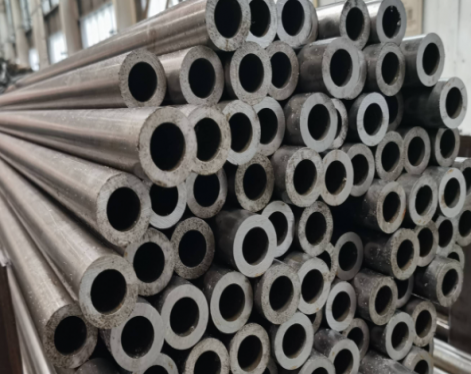
In terms of corrosion resistance, super duplex stainless steel (2507) can withstand Cl⁻ concentrations up to 20,000 ppm, meeting the demands of deep-sea oil and gas applications. Customized pipe materials are also becoming increasingly common, such as low-temperature hydrogen storage pipes (-253℃) using Ni-Cr alloys to improve toughness and resistance to hydrogen embrittlement.
The concept of green manufacturing is also being promoted, with short-process smelting reducing energy consumption in carbon steel production, and the utilization rate of recycled stainless steel reaching 90%, significantly reducing resource consumption and environmental impact.
Common classifications of precision seamless steel pipe materials
The manufacturing process of precision seamless steel pipes integrates multiple precision processes, including billet pickling, cold rolling, heat treatment, and non-destructive testing (such as eddy current testing and industrial CT). Through multi-pass drawing and oxygen-free annealing processes, the internal metal structure of the steel pipe becomes denser, resulting in superior performance. The materials used for these steel pipes include carbon steel (10#, 20#, 45#), alloy steel (Q345B, 40Cr), and stainless steel (304#, duplex stainless steel), with main chemical components including carbon (C), silicon (Si), manganese (Mn), sulfur (S), phosphorus (P), and chromium (Cr).Precision seamless steel pipes, depending on their intended use and performance requirements, are available in a wide variety of materials, which can be classified into major categories such as carbon steel, alloy steel, stainless steel, and other special alloy materials.
1. Carbon Steel
Carbon steel is one of the most common and cost-effective materials for precision seamless steel pipes, suitable for general mechanical structures and low-pressure fluid transportation.
Common grades include:
10#, 20#, 35#, 45# and other basic carbon steels
10# steel: Good toughness and excellent weldability, widely used in general mechanical structures.
20# steel: Medium strength, a general-purpose structural material.
35# and 45# steel: Possess higher strength and hardness, suitable for components subjected to higher stress.
In addition, there are other commonly used industrial carbon steels, such as Q235B and ST35, to meet different strength and processing requirements.
2. Alloy Steels
Alloy steels improve the strength, toughness, and heat resistance of steel pipes by adding specific elements (such as chromium, molybdenum, nickel, and manganese), and are commonly used under high mechanical loads or in special working conditions.
Common alloy steel grades include:
16Mn, 20Cr, 40Cr: Possessing good overall mechanical properties, widely used in the machinery manufacturing industry.
15CrMo, 20CrMo, 35CrMo, 42CrMo: Containing molybdenum and chromium elements, improving high-temperature strength and fatigue resistance.
These alloy steel precision tubes are mainly used in applications requiring high strength, good wear resistance, and strong impact load bearing capacity.
3. Stainless Steel
Stainless steel precision seamless steel pipes are particularly important in the chemical, food, pharmaceutical, and shipbuilding industries due to their excellent corrosion resistance and high-temperature performance.
Common stainless steel grades include:
304/304L: General-purpose stainless steel with good corrosion resistance and machinability;
316/316L: Offers stronger corrosion resistance than 304;
321, 310, 410, etc.: Used in high-temperature or more specialized environments.
The chemical composition, including elements such as chromium (Cr), nickel (Ni), and molybdenum (Mo), contributes to the superior corrosion and high-temperature resistance of stainless steel precision pipes.
4. Other Special Alloy Materials
Depending on the specific application requirements, precision seamless steel pipes may also utilize more advanced alloy materials, such as:
High-strength alloy steel: used for high-pressure boiler tubes or special load-bearing structures;
Duplex stainless steel and heat-resistant stainless steel: used in high-temperature and severely corrosive environments;
Titanium alloys, nickel-based alloys, etc.: offering advantages in extreme conditions such as aerospace and deep-sea applications.
Although these materials are more expensive, they can ensure a longer service life and more stable performance under demanding working conditions.
The development of precision seamless steel pipes
With increasing demands on material performance in industry, a new trend is emerging in precision seamless steel pipe materials: lightweighting has become a key focus. High-strength thin-walled pipes developed through microalloying (Nb/V/Ti) technology, such as X80 pipeline steel, have a wall thickness approximately 20% thinner than traditional materials. This significantly reduces weight while maintaining strength, with applications particularly prominent in the automotive and aerospace industries.In terms of corrosion resistance, super duplex stainless steel (2507) can withstand Cl⁻ concentrations up to 20,000 ppm, meeting the demands of deep-sea oil and gas applications. Customized pipe materials are also becoming increasingly common, such as low-temperature hydrogen storage pipes (-253℃) using Ni-Cr alloys to improve toughness and resistance to hydrogen embrittlement.
The concept of green manufacturing is also being promoted, with short-process smelting reducing energy consumption in carbon steel production, and the utilization rate of recycled stainless steel reaching 90%, significantly reducing resource consumption and environmental impact.