In mining, tunnel engineering, and geological exploration, complex conditions such as soft coal seams, fractured rock formations, or high-gas geology are frequently encountered. Under these conditions, traditional smooth drill pipes are prone to problems such as poor slag removal, borehole collapse, and even drill bit seizure. In these situations, helical drill pipes become the preferred solution for engineers.
As a highly efficient specialized drilling tool, helical drill pipes play an irreplaceable role in complex geological formations due to their unique structural design and superior physical properties. This article will delve into the common specifications and core characteristics of helical drill pipes, providing you with a comprehensive understanding of this "slag removal weapon" for underground engineering.
Spiral Blade Diameter: The outer diameter of the blade is usually larger than the pipe diameter. For example, a drill pipe with a pipe diameter of Φ73mm can have a spiral outer diameter ranging from 89mm to 250mm. This design creates an effective annular space between the drill pipe and the borehole wall, significantly improving cuttings transport efficiency.
Length: Standard lengths are generally between 0.5m and 3m (e.g., 0.5m, 1.0m, 1.5m, 2.0m, 3.0m), but customized production is also available to meet specific project requirements.
2. The drill pipe features multiple large-lead helical grooves evenly distributed around its circumference, enabling rapid slag removal;
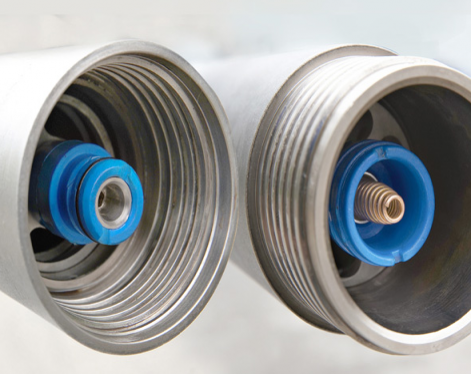
3. The drill pipe thread adopts a double-top structure design, increasing torsional resistance by approximately 30% compared to conventional joints;
4. The drill pipe uses a large-pitch trapezoidal taper thread, resulting in high thread tensile strength;
5. The drill pipe thread undergoes surface hardening treatment, providing strong anti-sticking performance, good sealing performance, and high stability.
As a highly efficient specialized drilling tool, helical drill pipes play an irreplaceable role in complex geological formations due to their unique structural design and superior physical properties. This article will delve into the common specifications and core characteristics of helical drill pipes, providing you with a comprehensive understanding of this "slag removal weapon" for underground engineering.
Augerl drill pipe geometry: diameter and length
Pipe Diameter: Typically ranges from a mere 16mm to over 200mm. Common sizes include Φ34, Φ42, Φ50, Φ63.5, Φ73, and Φ89. Smaller diameters are often used for shallow exploration or test holes, while larger diameters are used for deep hole drilling or main hole construction requiring high cuttings removal.Spiral Blade Diameter: The outer diameter of the blade is usually larger than the pipe diameter. For example, a drill pipe with a pipe diameter of Φ73mm can have a spiral outer diameter ranging from 89mm to 250mm. This design creates an effective annular space between the drill pipe and the borehole wall, significantly improving cuttings transport efficiency.
Technical Specifications of Auger Drill Pipe
Below is a typical specification range used in construction and piling applications. Actual parameters may vary depending on manufacturer and project requirements.| Parameter | Typical Range | Description |
| Outer Diameter | 89 mm – 325 mm | Larger diameters used for piling and deep foundation |
| Pipe Material | Q345 / 40Cr / Alloy steel | Ensures strength and fatigue resistance |
| Flight Thickness | 6 mm – 20 mm | Determines wear resistance and cutting efficiency |
| Pitch Distance | 200 mm – 600 mm | Controls soil lifting speed |
| Length per Section | 1 m – 6 m | Modular design for flexibility |
| Torque Capacity | 5,000 – 120,000 Nm | Depends on diameter and steel grade |
| Surface Treatment | Anti-corrosion / Hardfacing | Extends service life |
Length: Standard lengths are generally between 0.5m and 3m (e.g., 0.5m, 1.0m, 1.5m, 2.0m, 3.0m), but customized production is also available to meet specific project requirements.
| Specification (mm) | Max Outer Diameter (mm) (Integral Reinforcement Available) | Steel Grade | Effective Length (mm) (Customizable) | Pressure Rating (MPa) | Conductor Resistance (Ω) | Insulation Resistance (MΩ) | Recommended Torque (N·m) |
| Φ73×10 | Φ73 | S135 | 3000 | 12 | <0.5 | 10 | ≤6500 |
| Φ76×10 | Φ76 | S135 | 3000 | 12 | <0.5 | 10 | ≤7000 |
| Φ76×10.5 | Φ76 | S135 | 3000 | 12 | <0.5 | 10 | ≤8000 |
| Φ89×9.35 | Φ91 | S135 | 3000 | 12 | <0.5 | 10 | ≤12000 |
| Φ95×10 | Φ95 | S135 | 3000 | 12 | <0.5 | 10 | ≤13000 |
Features of spiral drill pipe:
1. The drill pipe body adopts an end-thickening process, eliminating weld seams, resulting in excellent overall mechanical properties and a long service life;2. The drill pipe features multiple large-lead helical grooves evenly distributed around its circumference, enabling rapid slag removal;
3. The drill pipe thread adopts a double-top structure design, increasing torsional resistance by approximately 30% compared to conventional joints;
4. The drill pipe uses a large-pitch trapezoidal taper thread, resulting in high thread tensile strength;
5. The drill pipe thread undergoes surface hardening treatment, providing strong anti-sticking performance, good sealing performance, and high stability.