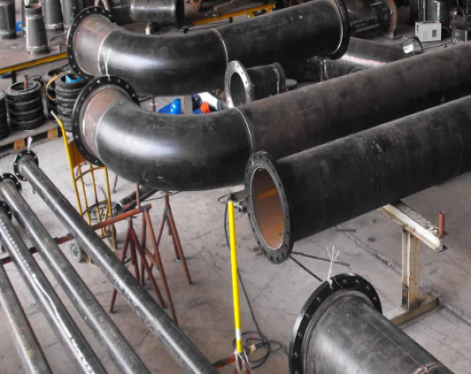
MS pipe, short for Mild Steel Pipe, is a type of low-carbon steel pipe, also commonly known as black iron pipe or galvanized steel pipe. It is widely used in water supply and drainage, fire protection, steel structure construction, and pipeline engineering. Accurately calculating the weight of MS pipe is an essential skill in project budgeting, material procurement, transportation calculations, and load calculations. This article will introduce mainstream calculation methods, formulas, practical examples, and related precautions to facilitate quick use by on-site personnel.
MS pipe is a hollow circular pipe. The industry-standard simplified calculation formula (calculating weight per meter, unit: kg/m) is as follows:
Formula 1 (most commonly used, calculated based on outer diameter and wall thickness)
Weight per meter (kg/m) = 0.02466 × Wall thickness (mm) × (Outer diameter (mm) − Wall thickness (mm))
This formula is derived from the circular pipe volume formula combined with steel density, and is applicable to all seamless and straight-seam MS circular pipes. It is also a universal formula used in the domestic and international pipe industry, with extremely small calculation errors.
MS pipes on the market are labeled in two ways: nominal diameter and outer diameter. These two methods should not be confused, as this is a frequent source of calculation errors:
1. Labeled by outer diameter: Seamless steel pipes, scaffolding pipes, and industrial pipelines are mostly labeled with outer diameter + wall thickness, and the above formula can be directly applied for calculation.
2. Labeled by nominal diameter (DN): Galvanized MS pipes used for water supply, drainage, and fire protection are commonly labeled with DN nominal diameter. DN only represents the pipe's flow diameter and is not equal to the outer diameter.
For these types of pipes, the DN value cannot be used directly for calculation. It is necessary to first refer to the national standard pipe material table to find the corresponding actual outer diameter, and then substitute it into the formula for calculation.
For example: For a DN50 galvanized MS pipe, the national standard corresponds to an outer diameter of 60.3mm. After determining the outer diameter and wall thickness, the weight calculation can be performed.
Pipe weight may vary according to manufacturing specifications.
Common standards include:
ASTM A53
ASTM A106
ASTM A500
API 5L
EN 10255
BS 1387
IS 1239
Although dimensions differ slightly, the calculation principle remains the same.
MS Pipe Core Calculation Formula
The universal density value for steel is 7.85 g/cm³ (7850 kg/m³), which is the unified standard value for steel pipe calculations.MS pipe is a hollow circular pipe. The industry-standard simplified calculation formula (calculating weight per meter, unit: kg/m) is as follows:
Formula 1 (most commonly used, calculated based on outer diameter and wall thickness)
Weight per meter (kg/m) = 0.02466 × Wall thickness (mm) × (Outer diameter (mm) − Wall thickness (mm))
This formula is derived from the circular pipe volume formula combined with steel density, and is applicable to all seamless and straight-seam MS circular pipes. It is also a universal formula used in the domestic and international pipe industry, with extremely small calculation errors.
Mild Steel Round Pipe Weight Chart
| Nominal Bore | Inch | 1/8″ | 3/8″ | 1/4″ | 1/2″ | 1″ | 3/4″ | 1.1/2″ |
| mm | 3 mm | 10 mm | 6 mm | 15 mm | 25 mm | 20 mm | 40 mm | |
| OD | Inch | 0.406 | 0.872 | 0.532 | 0.844 | 1.312 | 1.094 | 1.906 |
| mm | 10.32 | 17.1 | 13.49 | 21.43 | 33.8 | 27.2 | 48.4 | |
| Heavy (C-Class) Thickness Weight | mm | 2.65 | 2.9 | 2.9 | 3.25 | 4.05 | 3.25 | 4.05 |
| kg/mtr | 0.493 | 1.02 | 0.769 | 1.45 | 2.97 | 1.9 | 4.43 | |
| Light (A-Class) Thickness Weight | mm | 1.8 | 1.8 | 1.8 | 2 | 2.65 | 2.35 | 2.9 |
| kg/mtr | 0.361 | 0.674 | 0.517 | 0.952 | 2.01 | 1.41 | 3.25 | |
| Medium (B-Class) Thickness Weight | mm | 2 | 2.35 | 2.35 | 2.65 | 3.25 | 2.65 | 3.25 |
| kg/mtr | 0.852 | 0.407 | 1.122 | 2.44 | 1.58 | 3.61 | ||
| Nominal Bore | Inch | 1.1/4″ | 2″ | 3″ | 2.1/2″ | 5″ | 4″ | 6″ |
| mm | 32 mm | 50 mm | 80 mm | 65 mm | 125 mm | 100 mm | 150 mm | |
| OD | Inch | 1.656 | 2.375 | 3.5 | 3.004 | 5.5 | 4.5 | 6.5 |
| mm | 42.9 | 60.3 | 88.9 | 76.2 | 139.7 | 114.3 | 165.1 | |
| Heavy (C-Class) Thickness Weight | mm | 4.05 | 4.47 | 4.85 | 4.47 | 5.4 | 5.4 | 5.4 |
| kg/mtr | 3.84 | 6.17 | 10.1 | 7.9 | 17.8 | 14.4 | 21.2 | |
| Light (A-Class) Thickness Weight | mm | 2.65 | 2.9 | 3.25 | 3.25 | – | 3.65 | – |
| kg/mtr | 2.58 | 4.11 | 6.81 | 5.84 | – | 9.89 | – | |
| Medium (B-Class) Thickness Weight | mm | 3.25 | 3.65 | 4.05 | 3.65 | 4.85 | 4.5 | 4.85 |
| kg/mtr | 3.14 | 5.1 | 8.47 | 6.61 | 16.2 | 12.1 | 19.2 | |
| Check the weight of MS pipe according to its size in inches and mm before buying it | ||||||||
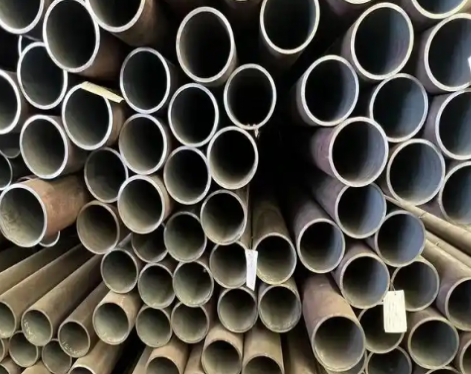
Instructions for Pipe Calculations Using Different Labeling Methods
MS pipes on the market are labeled in two ways: nominal diameter and outer diameter. These two methods should not be confused, as this is a frequent source of calculation errors:1. Labeled by outer diameter: Seamless steel pipes, scaffolding pipes, and industrial pipelines are mostly labeled with outer diameter + wall thickness, and the above formula can be directly applied for calculation.
2. Labeled by nominal diameter (DN): Galvanized MS pipes used for water supply, drainage, and fire protection are commonly labeled with DN nominal diameter. DN only represents the pipe's flow diameter and is not equal to the outer diameter.
For these types of pipes, the DN value cannot be used directly for calculation. It is necessary to first refer to the national standard pipe material table to find the corresponding actual outer diameter, and then substitute it into the formula for calculation.
For example: For a DN50 galvanized MS pipe, the national standard corresponds to an outer diameter of 60.3mm. After determining the outer diameter and wall thickness, the weight calculation can be performed.
MS Pipe Weight Calculation for Different Standards
Pipe weight may vary according to manufacturing specifications.Common standards include:
ASTM A53
ASTM A106
ASTM A500
API 5L
EN 10255
BS 1387
IS 1239
Although dimensions differ slightly, the calculation principle remains the same.