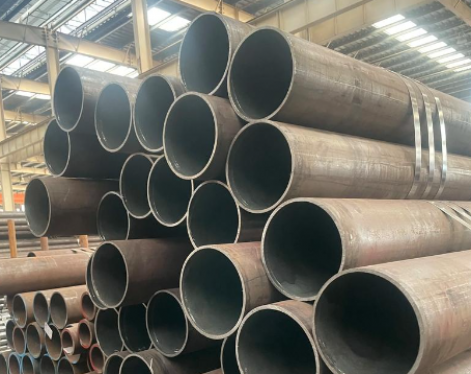
Many people believe that there isn't much difference between seamless and welded stainless steel pipes, and that as long as the inner wall of the welded pipe is smooth enough and the overall quality is good, it can be used as a substitute for seamless pipes. However, the differences between seamless and welded stainless steel pipes are far more significant than what is visible to the naked eye. Today, we will explain these differences.
1. There are certain differences in the chemical composition of seamless and welded stainless steel pipes.
The steel used to manufacture seamless pipes only meets the basic ASTM requirements. The steel used to manufacture welded pipes, however, contains chemical components suitable for welding. For example, a mixture of elements such as silicon, sulfur, manganese, oxygen, and delta ferrite in certain proportions can create a weld pool that facilitates heat transfer during the welding process, ensuring complete penetration of the weld seam. Steel pipes lacking these chemical components, such as seamless pipes, will produce various unstable factors during welding, making them difficult to weld securely and completely.
2. The quality of welded stainless steel pipes is easier to control than that of seamless stainless steel pipes.
Because welded stainless steel pipes are made from precisely cold-rolled sheets that have passed inspection, any defects are limited to the weld area. Seamless pipes, on the other hand, are formed by punching a hole in a stainless steel billet, resulting in many tearing phenomena in the wall thickness during the extrusion process. Eddy current testing shows that the defect rate of welded stainless steel pipes is generally lower than that of seamless stainless steel pipes. Using ultrasonic testing, the background noise of seamless stainless steel pipes is so high that it is difficult to detect defects. However, the background noise of welded stainless steel pipes is very low, making it easy to find defects.
3. The quality and precision of welded stainless steel pipes are higher and easier to control than those of seamless stainless steel pipes:
The manufacturing process of seamless stainless steel pipes involves punching a hole in a stainless steel billet at a temperature of 2200°F. At this high temperature, the tool steel becomes soft during punching and drawing, and the pipe is formed spirally from the inside of the hole. This results in uneven wall thickness and high eccentricity. The wall thickness variation of seamless pipes is greater than that of welded pipes. Because welded stainless steel pipes are made from precisely cold-rolled sheets, the wall thickness tolerance of welded pipes is very small, and the wall thickness is very uniform throughout the entire circumference.
4. The two also differ in price.
Generally, the price of welded steel pipes is less than half the price of seamless steel pipes, making them much cheaper.
5. Different manufacturing processes
The manufacturing process of seamless stainless steel pipes involves punching a hole in a stainless steel billet at a temperature of 2200°F. At this high temperature, the tool steel becomes soft through punching and drawing, and is formed spirally from the hole. This results in uneven wall thickness and high eccentricity in the pipe. The wall thickness variation of seamless pipes is greater than that of welded pipes. Because welded stainless steel pipes are made from precisely cold-rolled sheets, the wall thickness tolerance of welded pipes is very small, and the wall thickness is very uniform throughout the entire circumference.
Summary
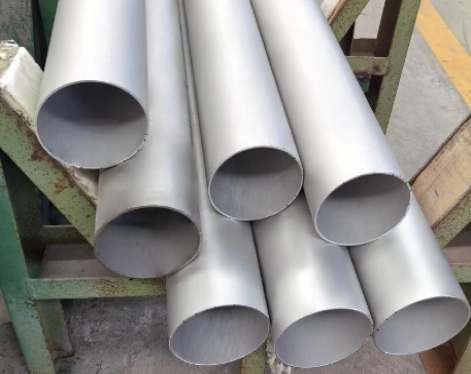
In summary, the main differences between stainless steel welded pipes and seamless pipes lie in their manufacturing process and performance characteristics: Welded pipes are made by welding stainless steel plates or strips, resulting in a weld seam. They offer high dimensional accuracy, good surface quality, and lower cost, making them suitable for decorative, structural, and low-to-medium pressure fluid transportation applications. Seamless pipes are manufactured through piercing, hot rolling, or cold drawing, without any weld seams. They have a more uniform structure, superior pressure resistance, and better high-temperature and corrosion resistance, resulting in higher safety. They are commonly used in high-pressure, high-temperature, and critical industrial applications such as petrochemical, boiler, and heat exchanger systems.
1. There are certain differences in the chemical composition of seamless and welded stainless steel pipes.
The steel used to manufacture seamless pipes only meets the basic ASTM requirements. The steel used to manufacture welded pipes, however, contains chemical components suitable for welding. For example, a mixture of elements such as silicon, sulfur, manganese, oxygen, and delta ferrite in certain proportions can create a weld pool that facilitates heat transfer during the welding process, ensuring complete penetration of the weld seam. Steel pipes lacking these chemical components, such as seamless pipes, will produce various unstable factors during welding, making them difficult to weld securely and completely.
2. The quality of welded stainless steel pipes is easier to control than that of seamless stainless steel pipes.
Because welded stainless steel pipes are made from precisely cold-rolled sheets that have passed inspection, any defects are limited to the weld area. Seamless pipes, on the other hand, are formed by punching a hole in a stainless steel billet, resulting in many tearing phenomena in the wall thickness during the extrusion process. Eddy current testing shows that the defect rate of welded stainless steel pipes is generally lower than that of seamless stainless steel pipes. Using ultrasonic testing, the background noise of seamless stainless steel pipes is so high that it is difficult to detect defects. However, the background noise of welded stainless steel pipes is very low, making it easy to find defects.
3. The quality and precision of welded stainless steel pipes are higher and easier to control than those of seamless stainless steel pipes:
The manufacturing process of seamless stainless steel pipes involves punching a hole in a stainless steel billet at a temperature of 2200°F. At this high temperature, the tool steel becomes soft during punching and drawing, and the pipe is formed spirally from the inside of the hole. This results in uneven wall thickness and high eccentricity. The wall thickness variation of seamless pipes is greater than that of welded pipes. Because welded stainless steel pipes are made from precisely cold-rolled sheets, the wall thickness tolerance of welded pipes is very small, and the wall thickness is very uniform throughout the entire circumference.
4. The two also differ in price.
Generally, the price of welded steel pipes is less than half the price of seamless steel pipes, making them much cheaper.
5. Different manufacturing processes
The manufacturing process of seamless stainless steel pipes involves punching a hole in a stainless steel billet at a temperature of 2200°F. At this high temperature, the tool steel becomes soft through punching and drawing, and is formed spirally from the hole. This results in uneven wall thickness and high eccentricity in the pipe. The wall thickness variation of seamless pipes is greater than that of welded pipes. Because welded stainless steel pipes are made from precisely cold-rolled sheets, the wall thickness tolerance of welded pipes is very small, and the wall thickness is very uniform throughout the entire circumference.
Summary
In summary, the main differences between stainless steel welded pipes and seamless pipes lie in their manufacturing process and performance characteristics: Welded pipes are made by welding stainless steel plates or strips, resulting in a weld seam. They offer high dimensional accuracy, good surface quality, and lower cost, making them suitable for decorative, structural, and low-to-medium pressure fluid transportation applications. Seamless pipes are manufactured through piercing, hot rolling, or cold drawing, without any weld seams. They have a more uniform structure, superior pressure resistance, and better high-temperature and corrosion resistance, resulting in higher safety. They are commonly used in high-pressure, high-temperature, and critical industrial applications such as petrochemical, boiler, and heat exchanger systems.