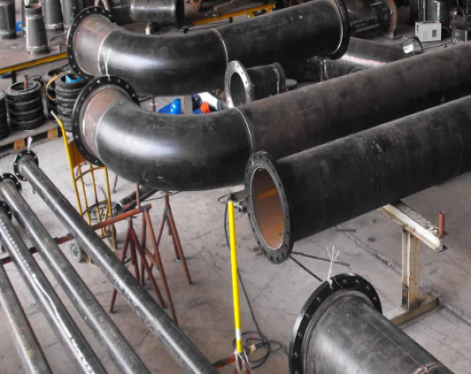
FBE coating is a single-layer protective system that forms an anti-corrosion coating on the surface of steel pipes through an electrostatic spraying process. Its core components are epoxy resin and a curing agent, which, after being melted at high temperatures, form chemical bonds with the metal substrate. Originating in the United States in the 1960s, this technology has become one of the most widely used pipeline anti-corrosion technologies globally, particularly suitable for the anti-corrosion needs of buried and underwater steel pipelines.
FBE coatings are available in single-layer and double-layer versions. Single-layer FBE coatings use a special fusion-bonded epoxy powder coating as the film-forming material, formed in a single step through electrostatic spraying. This epoxy powder coating is made from solid epoxy resin, curing agent, and various additives through mixing and pulverization. Before coating, the steel pipe must undergo shot blasting and medium-frequency preheating. Then, the epoxy powder coating is sprayed onto the heated steel pipe surface, where it melts, bonds, and cures to form the coating. Double-layer FBE coatings use a standard FBE coating as the base coat and a modified FBE coating as the outer anti-corrosion layer, further enhancing the overall performance of the coating.
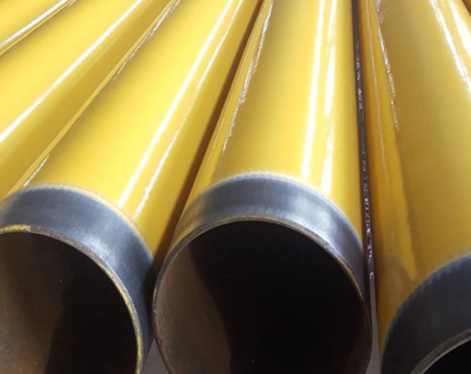
Thickness: 1-80 mm
Length: Random Length, Fixed Length, SRL, DRL
Standards: API 5L / ASTM A53-2007 / ASTM A106-2006 / BS1139 / BS1387
Material: GB/1700 Q215, 0235, 10#, 20#; GB71591 Q345
International Grades: ASTM: Grade B, Grade C, Grade D, Grade 50
EN: S185, S235JR, S235JO, E335, S355JR, S355J2
Japanese Standards: SS330, SS400, SPFC590
Mechanical Properties: Strong bending resistance (no cracks at 2.5°), abrasion resistance (wear loss ≤3L/μm), but weaker impact resistance than 3PE coatings.
Thermal Stability: Long-term operating temperature range -30℃~100℃, short-term tolerance to 150℃ high temperature.
Coating Thickness: Typical FBE coating thickness ranges from 100 to 500 micrometers (0.1 mm to 0.5 mm), depending on project requirements and the environmental conditions the pipe will face. For example, pipes used in highly corrosive environments may require thicker coatings for enhanced protection.
Coating Standards: Various standards specify the application and quality of FBE coatings, including:
These standards ensure that coating thickness, adhesion, and uniformity meet the necessary technical specifications for steel pipe protection.
ISO 21809: This international standard outlines the requirements for external coatings of steel pipes used in pipeline transportation systems, including FBE coatings.
AWWA C213: This standard provides guidance for protective coatings used on steel pipes and fittings in drinking water systems.
DIN 30670: This German standard specifies the requirements for polyethylene and epoxy coatings on steel pipes used for transporting liquids and gases.
Coating quality control: Quality control measures such as adhesion testing, coating thickness inspection, and visual inspection are crucial to ensuring the integrity and performance of FBE coatings. The coating must pass specific tests to verify its ability to adequately protect against environmental and chemical factors.
Definition of FBE Coating
FBE is an abbreviation for Fusion Bonded Epoxy, meaning fusion-bonded epoxy powder. FBE-coated steel pipes are made by uniformly applying epoxy powder to the surface of a steel pipe through a special process, followed by high-temperature curing to form a robust protective layer that is tightly bonded to the steel pipe. This protective layer acts like a strong armor for the steel pipe, enabling it to resist corrosion from various harsh environments.FBE coatings are available in single-layer and double-layer versions. Single-layer FBE coatings use a special fusion-bonded epoxy powder coating as the film-forming material, formed in a single step through electrostatic spraying. This epoxy powder coating is made from solid epoxy resin, curing agent, and various additives through mixing and pulverization. Before coating, the steel pipe must undergo shot blasting and medium-frequency preheating. Then, the epoxy powder coating is sprayed onto the heated steel pipe surface, where it melts, bonds, and cures to form the coating. Double-layer FBE coatings use a standard FBE coating as the base coat and a modified FBE coating as the outer anti-corrosion layer, further enhancing the overall performance of the coating.
Specifications of FBE Anti-corrosion Coated Steel Pipes
Dimensions: Outer Diameter: 20-3600 mmThickness: 1-80 mm
Length: Random Length, Fixed Length, SRL, DRL
Standards: API 5L / ASTM A53-2007 / ASTM A106-2006 / BS1139 / BS1387
Material: GB/1700 Q215, 0235, 10#, 20#; GB71591 Q345
International Grades: ASTM: Grade B, Grade C, Grade D, Grade 50
EN: S185, S235JR, S235JO, E335, S355JR, S355J2
Japanese Standards: SS330, SS400, SPFC590
FBE Coating Performance and Preparation Process Characteristics
Corrosion Resistance: The high cross-linking density of epoxy groups effectively blocks the penetration of water, oxygen, and Cl⁻ ions, exhibiting excellent acid and alkali resistance (pH 3~11).Mechanical Properties: Strong bending resistance (no cracks at 2.5°), abrasion resistance (wear loss ≤3L/μm), but weaker impact resistance than 3PE coatings.
Thermal Stability: Long-term operating temperature range -30℃~100℃, short-term tolerance to 150℃ high temperature.
FBE Coating Thickness and Coating Standards
The thickness of the FBE coating is crucial to pipe performance, especially in terms of corrosion resistance. Industry standards specify the required coating thickness for different applications to ensure pipe service life and durability.Coating Thickness: Typical FBE coating thickness ranges from 100 to 500 micrometers (0.1 mm to 0.5 mm), depending on project requirements and the environmental conditions the pipe will face. For example, pipes used in highly corrosive environments may require thicker coatings for enhanced protection.
Coating Standards: Various standards specify the application and quality of FBE coatings, including:
These standards ensure that coating thickness, adhesion, and uniformity meet the necessary technical specifications for steel pipe protection.
ISO 21809: This international standard outlines the requirements for external coatings of steel pipes used in pipeline transportation systems, including FBE coatings.
AWWA C213: This standard provides guidance for protective coatings used on steel pipes and fittings in drinking water systems.
DIN 30670: This German standard specifies the requirements for polyethylene and epoxy coatings on steel pipes used for transporting liquids and gases.
Coating quality control: Quality control measures such as adhesion testing, coating thickness inspection, and visual inspection are crucial to ensuring the integrity and performance of FBE coatings. The coating must pass specific tests to verify its ability to adequately protect against environmental and chemical factors.