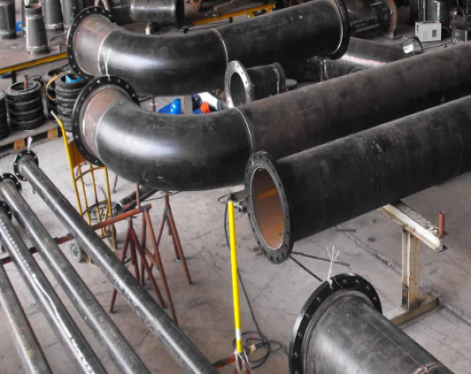
Precision alloy steel pipe is a special type of steel pipe characterized by high precision, high surface finish, and no oxide layer on either the inner or outer walls. It is typically produced using cold drawing or cold rolling processes, with extremely small tolerances for wall thickness and outer diameter. Structurally, it combines precise dimensions (high precision) with special alloy properties (such as high pressure resistance, corrosion resistance, and high temperature resistance), and is commonly used in hydraulic systems, automotive manufacturing, and aerospace fields.High-end precision alloy steel pipes are typically manufactured from seamless pipes, while some precision tubes can also be produced from ERW pipes through further precision processing.
1. High dimensional accuracy of finished tubes; inner and outer diameters can be accurate to within 0.05mm;
2. Good surface quality; smooth inner and outer surfaces;
3. More complex cross-sections; no oxide film on the inner and outer surfaces after cold rolling;
4. Can withstand higher pressure; flaring, flattening without cracking, and cold bending without deformation; capable of withstanding medium to high pressure;
5. Superior performance; denser metal.
Precision alloy steel pipes, as high-end pipe materials integrating special alloy materials and precision machining technology, have their core advantages in supporting the stringent demands of modern industry with a comprehensive combination of "performance + precision + value": In terms of materials, the matrix is strengthened by alloying elements such as chromium and molybdenum, resulting in a tensile strength 2-3 times that of ordinary carbon steel pipes. It can withstand high pressures of up to 70MPa, and the passivation film gives it remarkable durability in highly corrosive media such as sulfur-containing crude oil and seawater (e.g., 316L stainless steel pipe has a corrosion rate of <0.01mm/year over 15 years, extending its lifespan by 8 times). Simultaneously, it has a wide temperature range from -269℃ to 1200℃, making it suitable for extreme environments. In terms of processing, cold drawing and cold rolling processes achieve micron-level tolerances of ±0.05mm for outer diameter and ±0.03mm for wall thickness, with a surface roughness R... With a thickness as low as 0.4μm (nearly mirror-like) and a straightness error of <0.1mm/m, it reduces fluid resistance and prevents scaling, ensuring a repeatability of ±0.005mm for hydraulic systems. Applications range from aerospace fuel conduits (titanium alloy tubes reduce weight by 12kg per flight), new energy vehicle battery cooling (aluminum alloy tubes reduce weight by 35% and increase range), to semiconductor ultrapure water systems (water quality stable at 18.2MΩ·cm), covering multiple fields. Economically, although the initial cost is high, the total life-cycle maintenance cost is reduced by 42% (e.g., 75% reduction for unplanned shutdowns of petrochemical pipelines), the lightweight design improves efficiency, and the 95% recyclability aligns with the circular economy. It can be considered an "invisible skeleton" for high-end equipment, defining a new benchmark for industrial materials in terms of strength, precision, and reliability.
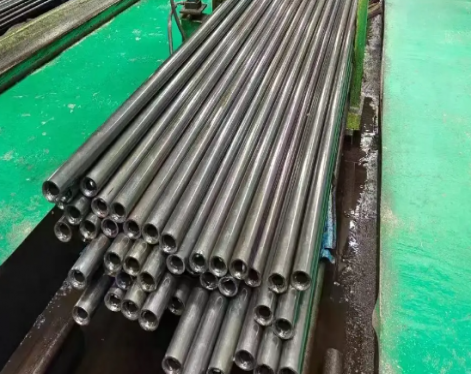
Automotive Industry (drive shafts, fuel injection systems)
Hydraulic and Pneumatic Systems
Oil and Gas Transportation
Boilers and Heat Exchangers
Aerospace and High-End Equipment Manufacturing
Precision alloy steel pipes play a critical role in modern industrial applications due to their superior strength, precision, and durability. As industries demand higher performance and reliability, these pipes are becoming an essential choice for engineers and manufacturers worldwide.
What are the advantages of alloy steel precision tubes, and why are they so widely used?
Alloy steel precision tubes possess the following characteristics, making them widely applicable in the automotive, motorcycle, petrochemical, power, aerospace, machining, and boiler industries:1. High dimensional accuracy of finished tubes; inner and outer diameters can be accurate to within 0.05mm;
2. Good surface quality; smooth inner and outer surfaces;
3. More complex cross-sections; no oxide film on the inner and outer surfaces after cold rolling;
4. Can withstand higher pressure; flaring, flattening without cracking, and cold bending without deformation; capable of withstanding medium to high pressure;
5. Superior performance; denser metal.
Precision alloy steel pipes, as high-end pipe materials integrating special alloy materials and precision machining technology, have their core advantages in supporting the stringent demands of modern industry with a comprehensive combination of "performance + precision + value": In terms of materials, the matrix is strengthened by alloying elements such as chromium and molybdenum, resulting in a tensile strength 2-3 times that of ordinary carbon steel pipes. It can withstand high pressures of up to 70MPa, and the passivation film gives it remarkable durability in highly corrosive media such as sulfur-containing crude oil and seawater (e.g., 316L stainless steel pipe has a corrosion rate of <0.01mm/year over 15 years, extending its lifespan by 8 times). Simultaneously, it has a wide temperature range from -269℃ to 1200℃, making it suitable for extreme environments. In terms of processing, cold drawing and cold rolling processes achieve micron-level tolerances of ±0.05mm for outer diameter and ±0.03mm for wall thickness, with a surface roughness R... With a thickness as low as 0.4μm (nearly mirror-like) and a straightness error of <0.1mm/m, it reduces fluid resistance and prevents scaling, ensuring a repeatability of ±0.005mm for hydraulic systems. Applications range from aerospace fuel conduits (titanium alloy tubes reduce weight by 12kg per flight), new energy vehicle battery cooling (aluminum alloy tubes reduce weight by 35% and increase range), to semiconductor ultrapure water systems (water quality stable at 18.2MΩ·cm), covering multiple fields. Economically, although the initial cost is high, the total life-cycle maintenance cost is reduced by 42% (e.g., 75% reduction for unplanned shutdowns of petrochemical pipelines), the lightweight design improves efficiency, and the 95% recyclability aligns with the circular economy. It can be considered an "invisible skeleton" for high-end equipment, defining a new benchmark for industrial materials in terms of strength, precision, and reliability.
Manufacturing Process of Precision Alloy Steel Pipes
The manufacturing of precision alloy steel pipes requires heating the raw material in a furnace to approximately 1200 degrees Celsius. Hydrogen is the primary fuel. Temperature control within the furnace is crucial during heating; the temperature must be maintained within a specified range to ensure the manufactured precision steel pipe possesses stable physical properties. After heating, the pipe is cooled by water spraying. Following cooling, the pipe is straightened, revealing its basic shape. The entire manufacturing process is quite complex.
Common Applications
Precision alloy steel pipes are widely used in:Automotive Industry (drive shafts, fuel injection systems)
Hydraulic and Pneumatic Systems
Oil and Gas Transportation
Boilers and Heat Exchangers
Aerospace and High-End Equipment Manufacturing