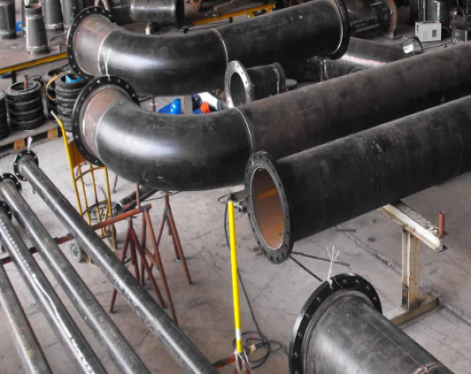
LSAW pipes, with their excellent pressure resistance and structural strength, are widely used in critical fields such as oil and gas transportation, marine engineering, and building piling. They often need to operate under extreme temperatures and pressures; failure could have catastrophic consequences. Therefore, rigorous inspection before shipment is not only the bottom line of quality control but also a solemn commitment to project safety. Below is a breakdown of how LSAW pipes are inspected before leaving the factory!
This guide explains how to inspect LSAW steel pipes before delivery based on common requirements from API 5L, ASTM, EN, and industrial quality-control practices used by leading manufacturers and inspection agencies.
Geometric Dimension Verification: Using laser diameter gauges, ultrasonic thickness gauges, and the string line method, multiple samples are taken to measure the pipe's outer diameter, wall thickness, out-of-roundness, length, and straightness. For example, the outer diameter tolerance typically needs to be controlled within ±0.5%D, and the curvature per meter must not exceed 1.5 mm.
Weld Morphology Inspection: Focus on inspecting the weld reinforcement, undercut, and misalignment to ensure a smooth transition from the weld to the base metal, preventing stress concentration from becoming a source of future cracking.
Ultrasonic Testing (UT): High-frequency sound waves are emitted into the steel pipe. The reflected wave signals precisely locate defects such as porosity, slag inclusions, or lack of fusion within the weld and heat-affected zone. The detection depth can reach 95% of the wall thickness.
Radiological Testing (RT): Using X-rays or gamma rays to take "X-ray images" of the weld, directly revealing internal volumetric defects. It is a powerful tool for dealing with internal flaws.
Magnetic Particle Testing (MT): Specifically designed for surface and near-surface cracks in ferromagnetic materials such as pipe ends, ensuring the absolute safety of the connection ports.
The pressure remains stable for several seconds while inspectors monitor for:
Leakage
Pressure drop
Permanent deformation
Surface seepage
Only pipes that pass the hydrostatic test can proceed to final delivery.
Laboratory testing ensures the steel pipe meets strength and toughness requirements.Manufacturers usually perform destructive sampling tests on finished pipes.
Common Mechanical Tests
Tensile testing
Yield strength testing
Elongation testing
Impact testing
Hardness testing
Impact testing is especially important for pipelines used in low-temperature environments.
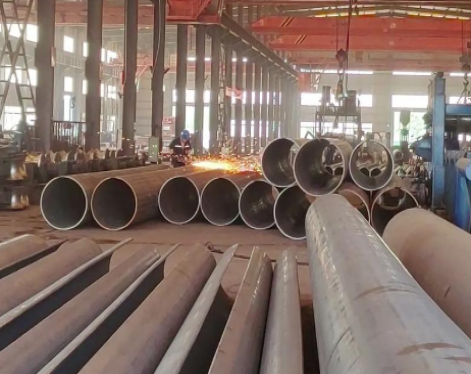
2. Non-destructive Testing: Physical testing methods are used to inspect the internal defects of the steel pipe. Common methods include ultrasonic testing (UT), radiographic testing (RT), magnetic particle testing (MT), and penetrant testing (PT), which can effectively detect problems such as cracks, lack of fusion, and slag inclusions.
3. Pressure and Strength Testing: LSAW steel pipes typically undergo hydrostatic or pneumatic testing to verify the pressure-bearing capacity and sealing performance of the weld and pipe body. Hydrostatic testing is the most widely used, while pneumatic testing has higher sensitivity but also stricter safety requirements.
4. Sealing Test: For steel pipes transporting liquids or gases, kerosene tests and hydrostatic tests can be used to detect whether there are leaks, through cracks, or porosity defects in the weld.
5. Hydrostatic and Weld Inspection Requirements Each steel pipe must undergo a hydrostatic test to ensure there are no leaks. Important welds typically require X-ray or ultrasonic testing; for steel pipes used to transport flammable media, welds generally require 100% non-destructive testing.
This guide explains how to inspect LSAW steel pipes before delivery based on common requirements from API 5L, ASTM, EN, and industrial quality-control practices used by leading manufacturers and inspection agencies.
1. Appearance and Geometric Dimension Inspection
Surface Defect Inspection: Carefully inspect the inner and outer surfaces of the steel pipe to ensure there are no cracks, folds, scars, or other defects. Even minor scratches or dents must be assessed to ensure their depth is within the allowable range of negative wall thickness deviation.Geometric Dimension Verification: Using laser diameter gauges, ultrasonic thickness gauges, and the string line method, multiple samples are taken to measure the pipe's outer diameter, wall thickness, out-of-roundness, length, and straightness. For example, the outer diameter tolerance typically needs to be controlled within ±0.5%D, and the curvature per meter must not exceed 1.5 mm.
Weld Morphology Inspection: Focus on inspecting the weld reinforcement, undercut, and misalignment to ensure a smooth transition from the weld to the base metal, preventing stress concentration from becoming a source of future cracking.
2. Non-Destructive Testing (NDT)
The weld is the "backbone" of a straight seam steel pipe. The presence of internal defects requires the use of high-tech NDT methods.Ultrasonic Testing (UT): High-frequency sound waves are emitted into the steel pipe. The reflected wave signals precisely locate defects such as porosity, slag inclusions, or lack of fusion within the weld and heat-affected zone. The detection depth can reach 95% of the wall thickness.
Radiological Testing (RT): Using X-rays or gamma rays to take "X-ray images" of the weld, directly revealing internal volumetric defects. It is a powerful tool for dealing with internal flaws.
Magnetic Particle Testing (MT): Specifically designed for surface and near-surface cracks in ferromagnetic materials such as pipe ends, ensuring the absolute safety of the connection ports.
3.Hydrostatic Testing of LSAW Pipes
Before leaving the factory, each LSAW steel pipe must undergo a rigorous hydrostatic testing process on a specialized machine. The pipe is filled with clean water and pressurized to 1.25 to 1.5 times its design pressure, and held at that pressure for a specified time (typically several seconds to tens of seconds). During this process, the system closely monitors for any pressure drop. Only those steel pipes that show no leaks, deformation, or seepage under high pressure are deemed to possess reliable sealing and pressure-bearing strength.The pressure remains stable for several seconds while inspectors monitor for:
Leakage
Pressure drop
Permanent deformation
Surface seepage
Only pipes that pass the hydrostatic test can proceed to final delivery.
| Test Item | Requirement |
| Test Medium | Clean water |
| Test Pressure | 1.25–1.5× design pressure |
| Holding Time | Several seconds |
| Acceptance Standard | No leakage or deformation |
4.Mechanical Testing for LSAW Pipes
Laboratory testing ensures the steel pipe meets strength and toughness requirements.Manufacturers usually perform destructive sampling tests on finished pipes.Common Mechanical Tests
Tensile testing
Yield strength testing
Elongation testing
Impact testing
Hardness testing
Impact testing is especially important for pipelines used in low-temperature environments.
5.Anti-corrosion Coating Inspection
Specialized inspections are conducted on 3PE/FBE coatings for buried pipelines: - Adhesion Test: The bonding strength between the coating and the substrate is assessed using the cross-cut test or peel test. The area of peeling off in the cross-cut area must be less than 5%; - Thickness Measurement: Multi-point testing is performed using a magnetic thickness gauge. The total thickness deviation must be within -10% to +20% of the nominal value; - Cathodic Disbondment Test: After 48 hours at 1.5V, the peel radius should be ≤8mm (3PE) or ≤10mm (FBE).
LSAW Steel Pipe Quality Inspection Methods
1. Visual Inspection: Visually inspect the weld surface quality using gauges, templates, and magnifying glasses to detect defects such as cracks, porosity, undercut, and dimensional deviations. Surface defects often affect internal quality.2. Non-destructive Testing: Physical testing methods are used to inspect the internal defects of the steel pipe. Common methods include ultrasonic testing (UT), radiographic testing (RT), magnetic particle testing (MT), and penetrant testing (PT), which can effectively detect problems such as cracks, lack of fusion, and slag inclusions.
3. Pressure and Strength Testing: LSAW steel pipes typically undergo hydrostatic or pneumatic testing to verify the pressure-bearing capacity and sealing performance of the weld and pipe body. Hydrostatic testing is the most widely used, while pneumatic testing has higher sensitivity but also stricter safety requirements.
4. Sealing Test: For steel pipes transporting liquids or gases, kerosene tests and hydrostatic tests can be used to detect whether there are leaks, through cracks, or porosity defects in the weld.
5. Hydrostatic and Weld Inspection Requirements Each steel pipe must undergo a hydrostatic test to ensure there are no leaks. Important welds typically require X-ray or ultrasonic testing; for steel pipes used to transport flammable media, welds generally require 100% non-destructive testing.