Introduction
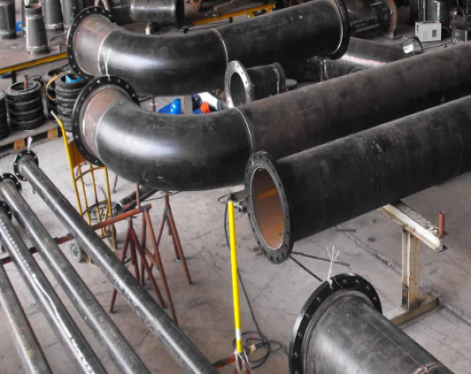
OCTG casing pipes play a critical role in oil and gas drilling.They support well integrity and protect underground formations.Choosing the right grade is essential for safety and performance.Among all options, J55, K55, N80, L80, and P110 are widely used.This guide explains their differences, properties, and applications.What Is OCTG Casing Pipe?
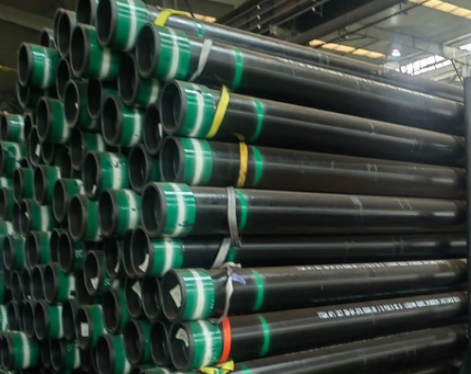
OCTG stands for Oil Country Tubular Goods.Casing pipes are installed in wells to maintain structure.They prevent collapse and isolate different pressure zones.Most casing pipes follow the API 5CT standard.Overview of OCTG Casing Pipe Grades
Each grade offers different strength and performance levels.The main difference lies in yield strength and application.API 5CT J55/K55 Casing and Tubing Pipe
API 5CT J55 and K55 casing and tubing are relatively low grade material pipe among all API 5CT pipes, they have same chemical composition and same yield strength 379-552 Mpa but in different tensile, J55 tensile strength minimum 517 Mpa which K55 is 655 Mpa. J55/K55 are lower grade than N80, L80, P110 or T95, so they are a cheaper option material and widely used in non corrosive oil well installation without high strength requirement.K55 casing pipe is a steel grade widely used in oil and gas operations to support well structures and transport hydrocarbons to the surface. It offers a practical balance of strength, cost, and ease of manufacturing, making it suitable for shallow to medium-depth wells. As an API-standard grade, K55 remains one of the most commonly used casing materials worldwide.
N80 Casing Pipe
API 5CT N80-Q casing pipe is a commonly used medium-strength steel grade in oil and gas well construction. Positioned between J55/K55 and higher grades like L80 or P110, it provides a solid balance of strength, toughness, and cost efficiency. The N80 category includes Type 1 and Type Q, with N80-Q featuring a quenching and tempering process that improves collapse resistance and overall downhole performance.
L80 Casing Pipe
L80 casing pipe is specifically engineered for corrosive environments, particularly in the presence of hydrogen sulfide (H₂S). It offers a minimum yield strength of 80,000 psi along with enhanced resistance to corrosion, and is available in variants such as L80-1, L80-9Cr, and L80-13Cr. This grade is widely used in sour service wells, offshore drilling, and other corrosion-sensitive operations, where it plays a critical role in preventing sulfide stress cracking and ensuring longer service life.
P110 Casing Pipe
API 5CT P110 casing and tubing is a high-grade steel pipe designed for deep and demanding oil and gas wells. Compared with J55, K55, N80, and L80, it offers superior mechanical strength and better resistance to downhole stress. With a minimum tensile strength of 862 MPa and a yield strength of 758–965 MPa, P110 is widely used in deep well drilling and production applications.
Comparison Table of OCTG Casing Grades
| Grade | Yield Strength (psi) | Corrosion Resistance | Typical Use |
| J55 | 55,000 | Low | Shallow wells |
| K55 | 55,000 | Low | Medium wells |
| N80 | 80,000 | Moderate | Deep wells |
| L80 | 80,000 | High | Sour environments |
| P110 | 110,000 | Moderate | HPHT wells |
How to Choose the Right OCTG Casing Grade?
Selecting the correct casing grade depends on several factors:1. Well Depth and Pressure
Deeper wells require higher strength grades like N80 or P110.
2. Corrosive Environment
If H₂S or CO₂ is present, L80 or higher alloy grades are recommended.
3. Budget Considerations
J55 and K55 offer cost advantages for less demanding projects.
4. Regulatory Compliance
Always ensure compliance with API 5CT and project specifications.
Conclusion
J55, K55, N80, L80, and P110 casing pipes each serve specific roles in oil and gas operations. From cost-effective shallow well solutions to high-strength deep drilling applications, understanding these grades helps ensure safety, efficiency, and long-term reliability.Choosing the right OCTG casing pipe is not just about strength—it’s about matching the material to the environment, pressure, and project goals.