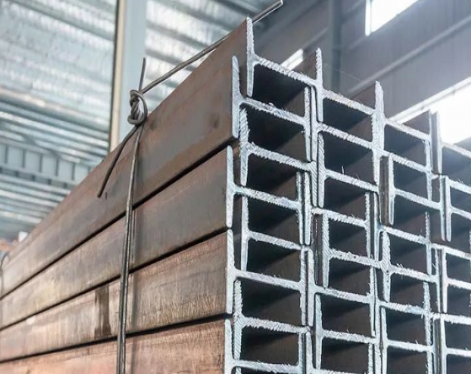
H-beams are one of the most widely used structural steel profiles in building structures and steel structure engineering. Each beam is heavy and has a narrow, tall "H"-shaped cross-section. Improper storage can lead to surface corrosion, increasing later rust removal costs, or even lateral bending deformation and overturning accidents, directly affecting structural safety and construction quality. The following five steps explain the "correct storage method" for H-beams: site preparation, stacking methods, stacking rules, corrosion and moisture protection, and daily management.
Quality Assurance: Prevent material deformation, corrosion, contamination, and damage, ensuring its performance.
Organization: Clearly zone and label areas facilitate management and retri, improving construction efficiency.
Minimize Secondary Handling: Plan reasonable storage locations, placing them as close as possible to the installation site to avoid repeated lifting.
Stacking Method:
Layered Stacking: Sufficient quantity and strength of dunnage (usually square timber or H-beams) must be used to elevate the components, at least 200mm above the ground, to prevent moisture and soil contamination.
Dunnage Position: Dunnage should be aligned vertically, typically placed 500mm-800mm from the ends of the components, and spaced 2-3 meters apart in between, to prevent bending and deformation due to excessive weight.
Number of Stacking Layers: Stacking should not be too high, generally no more than 3 layers, to avoid deformation of lower-layer components under pressure. For components with a large slenderness ratio (such as purlins), the number of layers should be strictly controlled.
Stabilization Measures: Supports or tripods should be installed on both sides of the stack to prevent components from rolling or tipping over.
H-beams are often exposed to air before use. Over time, the steel reacts chemically with oxygen and moisture in the air, producing rust, commonly known as corrosion. Rusting affects the performance of H-beams, causing gaps at the joints, leading to improper material placement, delayed construction, and even project collapse.
Therefore, to better prevent H-shaped steel from rusting, it should be stored in a dry place, avoiding exposure to air. Additionally, if rust is present before use, it is recommended to remove it to prevent small rust spots from developing into larger ones after use.
The core principles for placing H-beams:
Safety First: Ensure storage methods do not cause tipping, slippage, or other safety hazards, protecting personnel and equipment.Quality Assurance: Prevent material deformation, corrosion, contamination, and damage, ensuring its performance.
Organization: Clearly zone and label areas facilitate management and retri, improving construction efficiency.
Minimize Secondary Handling: Plan reasonable storage locations, placing them as close as possible to the installation site to avoid repeated lifting.
Storage Guidelines for Different Types of Materials
Main Steel Structural Components (H-beams, I-beams, square tubes, angle steel, etc.)Stacking Method:
Layered Stacking: Sufficient quantity and strength of dunnage (usually square timber or H-beams) must be used to elevate the components, at least 200mm above the ground, to prevent moisture and soil contamination.
Dunnage Position: Dunnage should be aligned vertically, typically placed 500mm-800mm from the ends of the components, and spaced 2-3 meters apart in between, to prevent bending and deformation due to excessive weight.
Number of Stacking Layers: Stacking should not be too high, generally no more than 3 layers, to avoid deformation of lower-layer components under pressure. For components with a large slenderness ratio (such as purlins), the number of layers should be strictly controlled.
Stabilization Measures: Supports or tripods should be installed on both sides of the stack to prevent components from rolling or tipping over.
How to Prevent H-Beams from Rusting?
H-Beam Rust Removal Methods and Preventive Maintenance. Even with rust-proofing treatment during H-beam manufacturing, rust can still form if not properly stored, handled, and used. So how can we prevent and maintain rust? Below is a detailed introduction to H-beams.H-beams are often exposed to air before use. Over time, the steel reacts chemically with oxygen and moisture in the air, producing rust, commonly known as corrosion. Rusting affects the performance of H-beams, causing gaps at the joints, leading to improper material placement, delayed construction, and even project collapse.
H-Beam Rust Removal Methods and Preventive Maintenance.
Therefore, before using H-beams, we need to remove rust, especially small rust spots, to prevent corrosion from worsening and affecting performance. This requires purchasing a more efficient rust remover to address surface oxidation as much as possible. Additionally, storing H-beams in a dry environment also helps prevent rusting.Therefore, to better prevent H-shaped steel from rusting, it should be stored in a dry place, avoiding exposure to air. Additionally, if rust is present before use, it is recommended to remove it to prevent small rust spots from developing into larger ones after use.