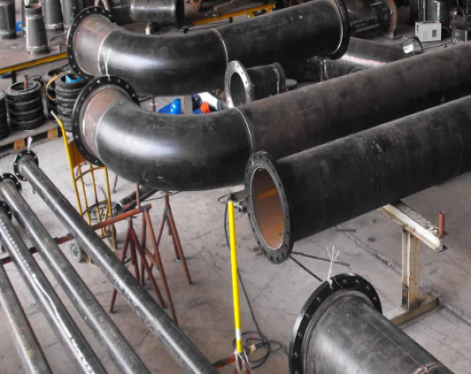
Pipe spool (also known as "segment prefabrication") is a new construction model that involves prefabricating and assembling pipe components (segments, fittings, supports, etc.) into standardized "spools" in a controlled workshop environment, and then transporting them to the site for rapid installation. It breaks away from the traditional linear process of "on-site cutting-welding-assembly," bringing systemic advantages to construction projects through the division of labor between "workshop prefabrication and on-site assembly"—not only improved efficiency, but also a paradigm shift in quality, safety, and cost control.
What Is Pipe Spooling in Construction?
Pipe spooling means fabricating pipe sections in a workshop. These sections are called pipe spools. Each spool includes pipes, flanges, elbows, and fittings.After fabrication, the pipe spool is transported to the job site. Workers then install it based on engineering drawings. This process replaces most field fabrication work.Pipe spool fabrication improves control and reduces construction risk. It also supports faster project execution.
1.Faster Project Execution with Pipe Spool Systems
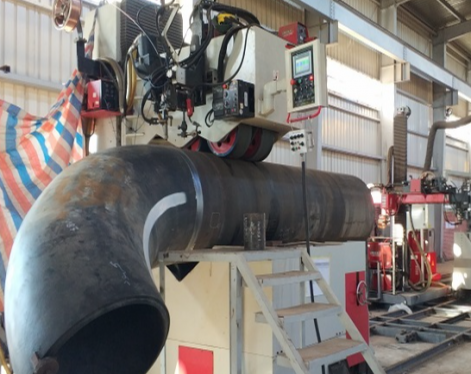
Pipe spooling improves project speed in a clear way. Fabrication and site work happen at the same time. This creates a strong parallel workflow.Projects do not need to wait for full site readiness. Instead, pipe spool units are prepared in advance. Installation becomes faster and more predictable.
2.Lower Total Labor Cost & Higher Productivity
Shop environments are built for fabrication: better ergonomics, better tooling, and fewer interruptions. This typically translates into higher output per labor hour compared with field welding/fitting. On site, crews spend less time on slow, uncomfortable tasks and more time on efficient installation.
3.Improved Safety in Construction Projects
Pipe spool fabrication improves safety performance. Most hot work moves away from the job site.This reduces exposure to high-risk activities. Workers face fewer hazards during installation.Construction sites become less crowded. Safety management becomes easier. Accident risks also decrease significantly.
4.Reduced Material Waste & Better Inventory Control
Shops can optimize cutting and nesting, track consumables, and control scrap more tightly than typical field operations. That often leads to less waste and tighter material accountability—important when projects face supply constraints or tight cost control.
What Is Pipe Spooling in Construction?
Pipe spooling means fabricating pipe sections in a workshop. These sections are called pipe spools. Each spool includes pipes, flanges, elbows, and fittings.After fabrication, the pipe spool is transported to the job site. Workers then install it based on engineering drawings. This process replaces most field fabrication work.Pipe spool fabrication improves control and reduces construction risk. It also supports faster project execution.
Advantages of Pipe Spooling
1.Faster Project Execution with Pipe Spool Systems
Pipe spooling improves project speed in a clear way. Fabrication and site work happen at the same time. This creates a strong parallel workflow.Projects do not need to wait for full site readiness. Instead, pipe spool units are prepared in advance. Installation becomes faster and more predictable.
2.Lower Total Labor Cost & Higher Productivity
Shop environments are built for fabrication: better ergonomics, better tooling, and fewer interruptions. This typically translates into higher output per labor hour compared with field welding/fitting. On site, crews spend less time on slow, uncomfortable tasks and more time on efficient installation.
3.Improved Safety in Construction Projects
Pipe spool fabrication improves safety performance. Most hot work moves away from the job site.This reduces exposure to high-risk activities. Workers face fewer hazards during installation.Construction sites become less crowded. Safety management becomes easier. Accident risks also decrease significantly.
4.Reduced Material Waste & Better Inventory Control
Shops can optimize cutting and nesting, track consumables, and control scrap more tightly than typical field operations. That often leads to less waste and tighter material accountability—important when projects face supply constraints or tight cost control.
Pipe Spool Advantages Summary Table
| Benefit Area | Pipe Spool Advantage |
| Schedule | Faster installation |
| Quality | Stable workshop control |
| Cost | Lower labor and waste |
| Safety | Less on-site hot work |
| Planning | Better coordination |