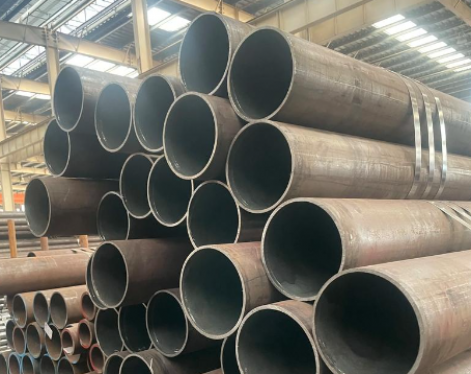
OCTG tubing, short for Oil Country Tubular Goods, is a steel pipe product specifically designed for oil and gas extraction. It mainly comprises three categories: casing, tubing, and drill pipe, and is an indispensable key material in the construction, completion, and production phases of oil and gas wells.
The drill pipe is a large, seamless tube that drives the drill bit and circulates drilling fluid. Nine-meter-long sections are connected via drill string connectors. The drill pipe simultaneously withstands the high torque of the drilling process, axial tension from its own weight, and internal pressure from the circulating drilling fluid. Furthermore, alternating bending loads due to non-verticality or borehole skew can be superimposed on these basic load patterns.
Compared to other OCTG components:
Casing pipes line and stabilize the drilled borehole; they prevent collapse, isolate different underground layers, and protect against contamination.
Drill pipes are heavy-duty tubulars used during the drilling phase — they transmit rotational force, circulate drilling fluid, and support the drill bit.
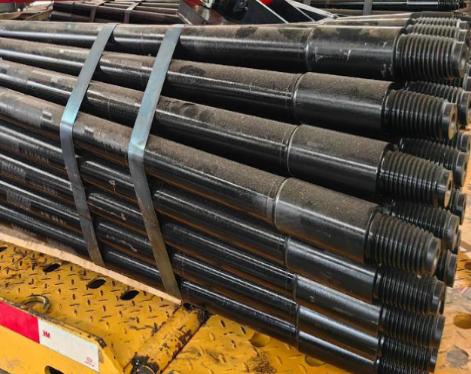
Modern drill pipe grades vary based on their yield strength, tensile strength, and elongation. For example, commonly used E-75, X-95, and G-105 grades offer different performance characteristics and enhanced toughness depending on the deployment environment. These drill pipes are also manufactured to industry standards, such as API Specification 5DP, to ensure consistent quality and compatibility across the industry.
Outer diameters typically range from 2⅜ inches to 6⅝ inches, while the inner diameter affects the flow of drilling fluid. Drill pipe joints are welded to the ends of the drill pipe to provide wear zones and allow for a secure connection to other drill string components. These joints must withstand significant tensile, bending, and torsional loads during most operations.
Driven by technological advancements, the new generation of drill pipe features wear-resistant coatings, enhanced fatigue resistance, and improved corrosion resistance, enabling its use in extreme environments such as deep water, high-temperature and high-pressure wells, and horizontal drilling.
Drill pipe plays a crucial role in conveying power and materials during drilling operations, contributing to improved efficiency and safety. The continuous development of drill pipe aligns with the demands of modern energy exploration and production.
The drill pipe is a large, seamless tube that drives the drill bit and circulates drilling fluid. Nine-meter-long sections are connected via drill string connectors. The drill pipe simultaneously withstands the high torque of the drilling process, axial tension from its own weight, and internal pressure from the circulating drilling fluid. Furthermore, alternating bending loads due to non-verticality or borehole skew can be superimposed on these basic load patterns.
What Is OCTG Tubing?
OCTG Tubing is a steel pipe that is placed inside the wellbore after the drilling and casing processes are complete. Its main purpose is to transport hydrocarbons (oil and/or gas) from the reservoir to the surface, where they can be collected and processed.Compared to other OCTG components:
Casing pipes line and stabilize the drilled borehole; they prevent collapse, isolate different underground layers, and protect against contamination.
Drill pipes are heavy-duty tubulars used during the drilling phase — they transmit rotational force, circulate drilling fluid, and support the drill bit.
The Role of OCTG Drill Pipe in Oil and Gas Drilling
Drill pipe is an integral part of the drill string, serving to transmit torque and rotational power from the surface drilling equipment to the drill bit at the bottom of the well. Hollow in structure, drill pipe is typically made of high-grade steel or lightweight aluminum alloys, capable of withstanding the extremely high pressures and stresses of deep well drilling while remaining lightweight and easy to handle.Modern drill pipe grades vary based on their yield strength, tensile strength, and elongation. For example, commonly used E-75, X-95, and G-105 grades offer different performance characteristics and enhanced toughness depending on the deployment environment. These drill pipes are also manufactured to industry standards, such as API Specification 5DP, to ensure consistent quality and compatibility across the industry.
Outer diameters typically range from 2⅜ inches to 6⅝ inches, while the inner diameter affects the flow of drilling fluid. Drill pipe joints are welded to the ends of the drill pipe to provide wear zones and allow for a secure connection to other drill string components. These joints must withstand significant tensile, bending, and torsional loads during most operations.
Driven by technological advancements, the new generation of drill pipe features wear-resistant coatings, enhanced fatigue resistance, and improved corrosion resistance, enabling its use in extreme environments such as deep water, high-temperature and high-pressure wells, and horizontal drilling.
Drill pipe plays a crucial role in conveying power and materials during drilling operations, contributing to improved efficiency and safety. The continuous development of drill pipe aligns with the demands of modern energy exploration and production.