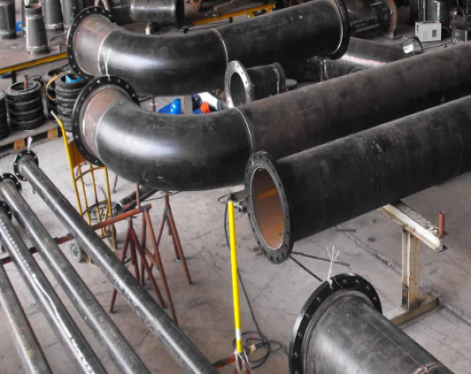
What Is a Hollow Section?
A Hollow Section, commonly referred to as Hollow Structural Section (HSS), is a type of structural steel product characterized by a closed, hollow cross-section. Hollow sections are widely used in construction, infrastructure, mechanical engineering, and industrial fabrication due to their excellent strength-to-weight ratio, uniform load distribution, and clean appearance.The term HSS is primarily used in the United States and regions following American structural standards, while in the UK, Europe, and many Commonwealth countries, hollow sections are typically classified as CHS, SHS, and RHS. Despite the difference in terminology, the core structural concept remains the same.
Commonly used standards for structural tubes include American standards ASTM A500 and ASTM A1085 (HSS structural tubes), European standards EN 10210 / EN 10219 (CHS, SHS, RHS), and Japanese standards JIS G 3444 and JIS G 3466.
Shapes and Geometry of Hollow Sections
Hollow sections are manufactured in several basic cross-sectional shapes to meet different structural and architectural requirements.| Hollow Section Type | Full Name | Typical Applications |
| CHS | Circular Hollow Section | Columns, pipelines support, trusses |
| SHS | Square Hollow Section | Frames, columns, architectural structures |
| RHS | Rectangular Hollow Section | Beams, bridges, heavy frames |
| Special Sections | Elliptical / Custom Shapes | Architectural and decorative structures |
All hollow sections share several key geometric characteristics:
Fully enclosed cross-section
Uniform wall thickness around the perimeter
Rounded corners, typically with a radius about 2× wall thickness, improving stress distribution and fatigue performance
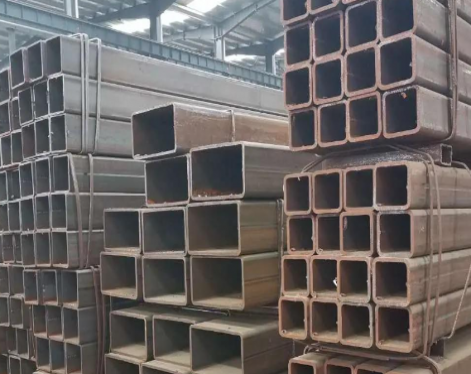
Materials Used in Hollow Sections
Hollow sections are manufactured exclusively from structural steels, including carbon steel, low-alloy high-strength steel, and stainless steel. Carbon steel hollow sections are the most widely used due to their cost efficiency and good mechanical properties.Stainless steel hollow sections are increasingly adopted in applications requiring corrosion resistance, such as coastal structures, chemical plants, food-processing facilities, and architectural façades. In these environments, stainless hollow sections combine structural strength with long-term durability and aesthetic appeal.