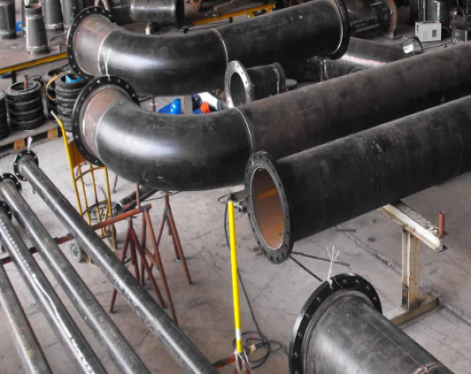
Stainless steel welded pipes are ubiquitous in petrochemical pipelines, cleanroom pipelines in food factories, and water supply systems in buildings. They have swept the market with their significantly lower price and high production capacity compared to seamless pipes, but the presence of weld seams has also sparked controversy regarding their reliability. As the "blood vessels" connecting industry and people's lives, what are their advantages and disadvantages? Today, we'll introduce them to you.
Common standards include:
ASTM A312 (austenitic stainless steel pipes)
ASTM A358 (electric-fusion-welded pipes)
EN 10217-7 (European standard for welded stainless pipes)
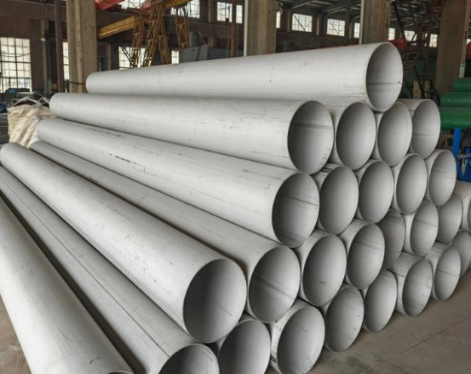
One of the biggest advantages is its lower production cost compared to seamless pipes. The manufacturing process is simpler and more efficient, especially for large-diameter pipes, making it an economical choice for bulk projects.
2. Wide Size Range and Availability
Welded pipes can be produced in a broader range of diameters and wall thicknesses. They are especially ideal for large-diameter applications where seamless pipes become expensive or impractical.
3. Smooth Surface Finish
Modern welding technologies such as laser welding produce clean, smooth weld seams. This is particularly important in industries like food processing, pharmaceuticals, and water treatment, where hygiene and corrosion resistance are critical.
4. Good Corrosion Resistance
Like all stainless steel products, welded pipes offer excellent resistance to corrosion, oxidation, and chemical exposure. Grades such as 304 and 316 are commonly used in harsh environments.
5. High Production Efficiency
Mass production is faster and more scalable compared to seamless pipes. This ensures shorter lead times and stable supply for large-scale infrastructure and industrial projects.
The welded seam can be a potential weak point compared to seamless pipes. Although modern welding techniques significantly improve strength, the seam may still be more susceptible to stress or corrosion under extreme conditions.
2. Lower Pressure Resistance (in Some Cases)
Welded pipes may not perform as well as seamless pipes under very high pressure or temperature conditions, especially in critical applications such as high-pressure boilers or oil exploration.
3. Risk of Weld Defects
Improper welding can lead to defects such as cracks, porosity, or incomplete fusion. This is why strict quality control, including non-destructive testing (NDT), is essential.
4. Corrosion at the Weld Zone
The heat-affected zone (HAZ) near the weld may have slightly reduced corrosion resistance if not properly treated (e.g., through pickling and passivation).
Stainless Welded vs. Seamless Steel Pipe
The meaning of stainless steel welded steel pipe
Stainless welded steel pipe is manufactured by rolling stainless steel plates or coils into a cylindrical shape and joining the seam through welding processes such as TIG (Tungsten Inert Gas), ERW (Electric Resistance Welding), or laser welding. Compared with seamless pipes, welded pipes are more cost-effective and suitable for a wide range of applications.Common standards include:
ASTM A312 (austenitic stainless steel pipes)
ASTM A358 (electric-fusion-welded pipes)
EN 10217-7 (European standard for welded stainless pipes)
Advantages of Stainless Welded Steel Pipe
1. Cost-Effective SolutionOne of the biggest advantages is its lower production cost compared to seamless pipes. The manufacturing process is simpler and more efficient, especially for large-diameter pipes, making it an economical choice for bulk projects.
2. Wide Size Range and Availability
Welded pipes can be produced in a broader range of diameters and wall thicknesses. They are especially ideal for large-diameter applications where seamless pipes become expensive or impractical.
3. Smooth Surface Finish
Modern welding technologies such as laser welding produce clean, smooth weld seams. This is particularly important in industries like food processing, pharmaceuticals, and water treatment, where hygiene and corrosion resistance are critical.
4. Good Corrosion Resistance
Like all stainless steel products, welded pipes offer excellent resistance to corrosion, oxidation, and chemical exposure. Grades such as 304 and 316 are commonly used in harsh environments.
5. High Production Efficiency
Mass production is faster and more scalable compared to seamless pipes. This ensures shorter lead times and stable supply for large-scale infrastructure and industrial projects.
Disadvantages of Stainless Welded Steel Pipe
1. Weld Seam WeaknessThe welded seam can be a potential weak point compared to seamless pipes. Although modern welding techniques significantly improve strength, the seam may still be more susceptible to stress or corrosion under extreme conditions.
2. Lower Pressure Resistance (in Some Cases)
Welded pipes may not perform as well as seamless pipes under very high pressure or temperature conditions, especially in critical applications such as high-pressure boilers or oil exploration.
3. Risk of Weld Defects
Improper welding can lead to defects such as cracks, porosity, or incomplete fusion. This is why strict quality control, including non-destructive testing (NDT), is essential.
4. Corrosion at the Weld Zone
The heat-affected zone (HAZ) near the weld may have slightly reduced corrosion resistance if not properly treated (e.g., through pickling and passivation).
Stainless Welded vs. Seamless Steel Pipe
| Feature | Welded Pipe | Seamless Pipe |
| Cost | Lower | Higher |
| Strength | Slightly lower at seam | Uniform strength |
| Size Range | Wider, especially large diameters | Limited for large sizes |
| Surface Finish | Smooth and customizable | Generally good |
| Applications | General industrial use | High-pressure, critical systems |