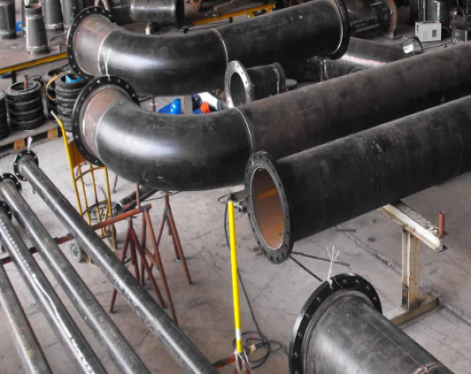
In the ultra-high temperature reaction towers of petroleum refining plants, the ultra-pure gas pipelines of semiconductor workshops, and the radioactive media transportation systems of nuclear power plants, a metal pipe with a bright, silvery surface and uniform texture is silently fulfilling a critical mission—this is ASTM A312 stainless steel seamless pipe. As a globally recognized standard for high-end fluid transport carriers, it not only defines the chemical boundaries of the material but also, with its superior mechanical properties and corrosion resistance, has become a "vascular-grade" material in high-end industrial fields.
Comprehensive range of grades: Covering more than 20 grades, including TP304/304L, TP316/316L, TP321, TP347, etc., where the "L" suffix indicates low carbon content (C≤0.03%), significantly improving resistance to intergranular corrosion;
Zero tolerance for impurities: Taking TP316L as an example, it requires Cr content of 16.0-18.0%, Ni 10.0-14.0%, Mo 2.0-3.0%, and sulfur and phosphorus impurities controlled to below 0.03%;
Graded mechanical properties: Specifies room temperature tensile strength ≥515 MPa, yield strength ≥205 MPa, and elongation ≥35%, with high-temperature grades (such as TP310S) also specifying creep strength data at 871℃.
High-temperature service
High-pressure piping systems
Corrosive and aggressive chemical environments
They are widely used in industries where leak prevention, structural integrity, and long-term durability are essential.
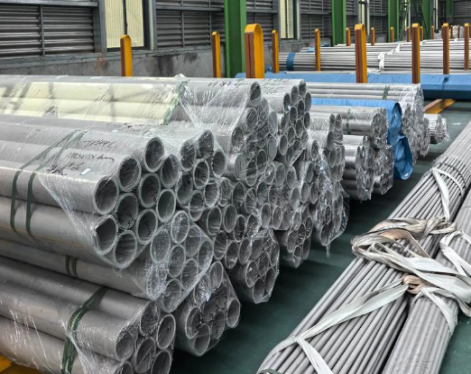
Compared to welded pipes, A312 seamless pipes offer four irreplaceable advantages due to their "seamless structure":
1. Pressure Resistance: Over 30% higher burst pressure
The weld seam is the "weak point" of a pipe, and welding residual stress can lead to crack propagation. Seamless pipes have uniform stress distribution, resulting in a burst pressure 30% higher than welded pipes of the same specifications, making them particularly suitable for applications such as supercritical power plant boilers (25MPa main steam pipes) and high-pressure hydrogenation units.
2. Intergranular Corrosion Resistance: "Zero-risk" safety guarantee
The heat-affected zone of welded pipes is prone to chromium carbide precipitation due to sensitization, leading to intergranular corrosion. Seamless pipes have no heat-affected zone, and even in seawater environments containing Cl⁻, the service life of TP316L is twice as long as that of welded pipes.
3. High-Temperature Stability: "Strength champion" at 900℃
TP321 (Ti stabilized) and TP347 (Nb stabilized) use titanium and niobium elements to preferentially combine with carbon at high temperatures, preventing chromium loss. For example, TP347 has a creep strength of 120MPa at 870℃, making it an ideal choice for the quenching section of ethylene cracking furnaces.
4. Cleanliness: Particle contamination ≤0.1mg/m²
Seamless pipes have no welding spatter or oxide scale residue on their inner surface. After electropolishing, the roughness can reach Ra 0.4μm, meeting the SEMI F72 standard (requirements for ultra-pure gas pipelines in semiconductor plants), eliminating dead corners for microbial growth.
The value of ASTM A312 stainless steel seamless pipes lies not only in their superior physical parameters but also in their ability to confidently handle extreme operating conditions—withstanding cracking gas at 600℃, liquid nitrogen at -196℃, and 98% concentrated sulfuric acid, while still maintaining airtightness and purity for decades. From material composition to manufacturing processes, from performance verification to application scenarios, every aspect demonstrates modern industry's unwavering pursuit of "zero defects."
ASTM A312 Brief Description
This standard applies to seamless, welded, and heavily cold-worked austenitic stainless steel nominal pipes for high-temperature and general corrosion applications. ASTM A312 is a standard for seamless and welded austenitic stainless steel nominal pipes developed by the American Society for Testing and Materials (ASTM), and its authority stems from its stringent control over material composition:Comprehensive range of grades: Covering more than 20 grades, including TP304/304L, TP316/316L, TP321, TP347, etc., where the "L" suffix indicates low carbon content (C≤0.03%), significantly improving resistance to intergranular corrosion;
Zero tolerance for impurities: Taking TP316L as an example, it requires Cr content of 16.0-18.0%, Ni 10.0-14.0%, Mo 2.0-3.0%, and sulfur and phosphorus impurities controlled to below 0.03%;
Graded mechanical properties: Specifies room temperature tensile strength ≥515 MPa, yield strength ≥205 MPa, and elongation ≥35%, with high-temperature grades (such as TP310S) also specifying creep strength data at 871℃.
Scope of ASTM A312 Seamless Stainless Steel Pipes
ASTM A312 seamless stainless steel pipes are designed for:High-temperature service
High-pressure piping systems
Corrosive and aggressive chemical environments
They are widely used in industries where leak prevention, structural integrity, and long-term durability are essential.
Advantages of ASTM A312 Stainless Steel Seamless Pipes
Compared to welded pipes, A312 seamless pipes offer four irreplaceable advantages due to their "seamless structure":1. Pressure Resistance: Over 30% higher burst pressure
The weld seam is the "weak point" of a pipe, and welding residual stress can lead to crack propagation. Seamless pipes have uniform stress distribution, resulting in a burst pressure 30% higher than welded pipes of the same specifications, making them particularly suitable for applications such as supercritical power plant boilers (25MPa main steam pipes) and high-pressure hydrogenation units.
2. Intergranular Corrosion Resistance: "Zero-risk" safety guarantee
The heat-affected zone of welded pipes is prone to chromium carbide precipitation due to sensitization, leading to intergranular corrosion. Seamless pipes have no heat-affected zone, and even in seawater environments containing Cl⁻, the service life of TP316L is twice as long as that of welded pipes.
3. High-Temperature Stability: "Strength champion" at 900℃
TP321 (Ti stabilized) and TP347 (Nb stabilized) use titanium and niobium elements to preferentially combine with carbon at high temperatures, preventing chromium loss. For example, TP347 has a creep strength of 120MPa at 870℃, making it an ideal choice for the quenching section of ethylene cracking furnaces.
4. Cleanliness: Particle contamination ≤0.1mg/m²
Seamless pipes have no welding spatter or oxide scale residue on their inner surface. After electropolishing, the roughness can reach Ra 0.4μm, meeting the SEMI F72 standard (requirements for ultra-pure gas pipelines in semiconductor plants), eliminating dead corners for microbial growth.