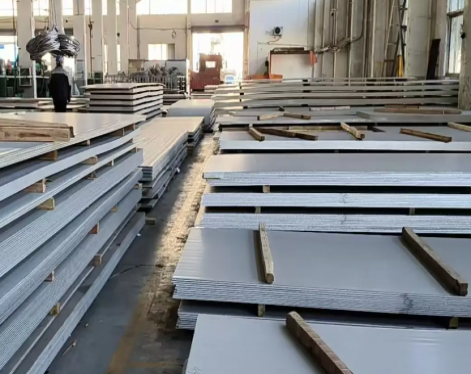
321 stainless steel plate is a stabilized austenitic stainless steel alloy designed for improved resistance to intergranular corrosion in high-temperature environments. By adding titanium to the alloy composition, 321 stainless steel plate prevents chromium carbide precipitation during prolonged exposure to elevated temperatures or welding operations. This makes it a reliable material choice for applications involving thermal cycling and sustained heat exposure.
321 stainless steel plate is widely used in aerospace, petrochemical, power generation, and high-temperature processing industries where dimensional stability and corrosion resistance are required.
This makes 321 a primary choice for applications where the material is subjected to high temperatures and welding, and where post-weld annealing is not feasible. It is a non-magnetic grade that cannot be hardened by heat treatment, but it does possess excellent toughness, even at cryogenic temperatures.
The "H" version, 321H (UNS S32109), is a modification of 321 with a higher carbon content, providing improved high-temperature strength and creep resistance.
Material Composition: 321 stainless steel plate is a Ni-Cr-Ti type austenitic stainless steel. Its chemical composition is approximately C≤0.08, Mn≤2.00, Si≤1.00, P≤0.045, S≤0.030, Cr 17.0-19.0, Ni 9.00-12.00, and Ti≥5(C+N).
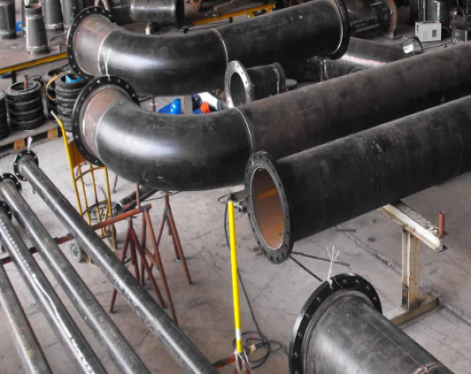
Structural Characteristics: It has an austenitic structure, which gives it good plasticity, toughness, and weldability. The pipe/tube is typically in the form of a hollow, long-strip steel, available in seamless and welded types.
Production Process: Seamless 321 stainless steel plate is typically produced by hot rolling, cold rolling, cold drawing, or extrusion processes. Welded pipe/tube is made by bending and welding stainless steel plates or strips, and can be classified into straight-seam welded and spiral-welded types depending on the welding method.
The titanium content binds carbon in stable titanium carbides, reducing the risk of intergranular corrosion after welding or high-temperature exposure.
Mechanical Properties
In the solution-annealed condition, 321 stainless steel plate offers mechanical properties comparable to 304 stainless steel plate, with improved stability at elevated temperatures.
These values may vary depending on plate thickness and manufacturing process, which is normal within standard tolerances.
316 stainless steel plate contains molybdenum, which provides superior resistance to pitting and crevice corrosion in chloride-rich environments. It is commonly used in marine, chemical, and coastal applications. The choice between 321 and 316 depends on whether high-temperature stability or chloride corrosion resistance is more critical.
321 stainless steel plate is widely used in aerospace, petrochemical, power generation, and high-temperature processing industries where dimensional stability and corrosion resistance are required.
What is 321 Stainless Steel plate?
321 stainless steel is a stabilized austenitic stainless steel, similar to Type 304, but crucially containing titanium. This titanium content acts as a stabilizer, preventing the formation of carbides during welding and high-temperature service. Without this stabilization, chromium carbides would precipitate along grain boundaries in the temperature range of 800°F to 1500°F (427°C to 816°C), leading to a condition called "sensitization," which makes the steel susceptible to intergranular corrosion.This makes 321 a primary choice for applications where the material is subjected to high temperatures and welding, and where post-weld annealing is not feasible. It is a non-magnetic grade that cannot be hardened by heat treatment, but it does possess excellent toughness, even at cryogenic temperatures.
The "H" version, 321H (UNS S32109), is a modification of 321 with a higher carbon content, providing improved high-temperature strength and creep resistance.
Material Composition: 321 stainless steel plate is a Ni-Cr-Ti type austenitic stainless steel. Its chemical composition is approximately C≤0.08, Mn≤2.00, Si≤1.00, P≤0.045, S≤0.030, Cr 17.0-19.0, Ni 9.00-12.00, and Ti≥5(C+N).
Structural Characteristics: It has an austenitic structure, which gives it good plasticity, toughness, and weldability. The pipe/tube is typically in the form of a hollow, long-strip steel, available in seamless and welded types.
Production Process: Seamless 321 stainless steel plate is typically produced by hot rolling, cold rolling, cold drawing, or extrusion processes. Welded pipe/tube is made by bending and welding stainless steel plates or strips, and can be classified into straight-seam welded and spiral-welded types depending on the welding method.
Chemical Composition of Stainless Steel plate
The key distinguishing feature of 321 stainless steel plate is the addition of titanium, which stabilizes carbon and enhances high-temperature performance.| Element | Specification Range (%) |
| Carbon (C) | ≤ 0.08 |
| Chromium (Cr) | 17.0 – 19.0 |
| Nickel (Ni) | 9.0 – 12.0 |
| Titanium (Ti) | ≥ 5 × C (max 0.70) |
| Manganese (Mn) | ≤ 2.0 |
| Silicon (Si) | ≤ 1.0 |
| Phosphorus (P) | ≤ 0.045 |
| Sulfur (S) | ≤ 0.03 |
The titanium content binds carbon in stable titanium carbides, reducing the risk of intergranular corrosion after welding or high-temperature exposure.
Mechanical Properties
In the solution-annealed condition, 321 stainless steel plate offers mechanical properties comparable to 304 stainless steel plate, with improved stability at elevated temperatures.
| Mechanical Property | Typical Minimum Value |
| Tensile Strength | 515 MPa |
| Yield Strength (0.2% offset) | 205 MPa |
| Elongation | 40% |
| Brinell Hardness | ≤ 217 HB |
These values may vary depending on plate thickness and manufacturing process, which is normal within standard tolerances.
High-Temperature Performance
321 stainless steel plate is specifically designed for service at elevated temperatures. It maintains good mechanical strength and oxidation resistance up to approximately 870°C in continuous service and up to about 925°C in intermittent service.Unlike non-stabilized grades, 321 stainless steel plate resists sensitization when exposed to temperatures between 450°C and 850°C, making it suitable for heat exchangers, exhaust systems, and thermal processing equipment.321 vs 316 Stainless Steel Plate
321 stainless steel plate is titanium-stabilized and designed for high-temperature service. It offers excellent resistance to intergranular corrosion after welding or prolonged exposure to heat, making it suitable for exhaust systems, heat exchangers, and other applications involving thermal cycling.316 stainless steel plate contains molybdenum, which provides superior resistance to pitting and crevice corrosion in chloride-rich environments. It is commonly used in marine, chemical, and coastal applications. The choice between 321 and 316 depends on whether high-temperature stability or chloride corrosion resistance is more critical.