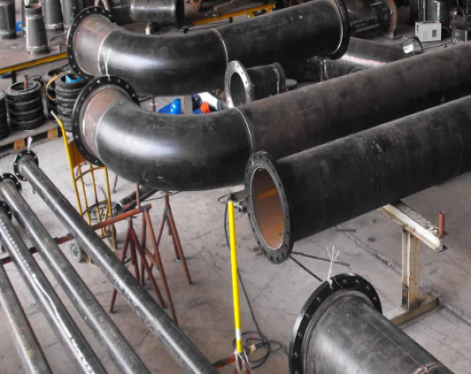
OCTG, or well tubing, plays a crucial role in the extremely harsh environments of oil and gas extraction. These steel pipes, including casing, tubing, and drill pipe, are highly specialized, capable of withstanding immense pressure, temperature variations, and corrosive environments. But what makes OCTG so unique? Why are they so important to the energy industry? This article will delve into all aspects of OCTG and explain the differences and functions of casing, tubing, and drill pipe.
Oilfield tubing (OCTG) is used in the oil and gas production sector and generally includes drill pipe, casing, and tubing for onshore and offshore applications.Thick-walled oilfield tubing manufacturers must not only meet each customer's specifications but also comply with API 5L & 5CT, ISO, EN, and other standards.
The oil and gas industry requires that any tubing used in critical applications be tested to a high-quality standard. Furthermore, API standards require testing plans and supporting data to verify the effectiveness of the testing plan in the testing process.
1. J55 & K55
Grade J55: Entry-level steel grade with moderate yield and tensile strength, widely used in shallow, low-pressure wells due to its affordability and reliable performance.
Grade K55: Similar to J55 but typically has higher tensile strength, making it suitable for slightly more demanding applications than J55.
2. N80 (Type 1 & Q)
N80: A popular intermediate grade used in medium-depth wells requiring more strength than J55/K55.
N80Q: Quench & tempered variant offering more uniform properties.
3. L80
A controlled yield strength grade with hardness requirements. Especially suitable for sour environments (H₂S/CO₂), where corrosion resistance is important.
4. C90, T95
These grades are used in sour conditions and deeper wells, where higher resistance to stress corrosion cracking and strength are needed.
5. P110
A high-strength grade for deep, high-pressure, high-temperature (HPHT) wells, where robust mechanical performance is essential.
6. Q125 and Others
Q125 and other higher grades (e.g., C110) are used in specialized, ultra-deep or extreme conditions, offering superior strength and durability.
API 5CT Grade Comparison
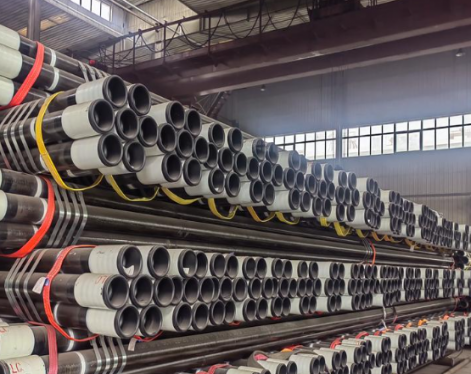
1. Casing
Casing is used to line the wellbore, preventing collapse of the surrounding rock and maintaining the structural integrity of the wellbore. Casing is typically made of steel, with standard diameters ranging from 4.5 inches to 30 inches. Studies have shown that high-strength steel casing can significantly reduce wellbore failure rates, and certain corrosion-resistant materials can extend casing life by up to 40%.
2. Tubing
Tubing is crucial for transporting oil and gas from the wellbore to the surface. These tubings are designed to withstand high pressure and extreme temperatures and utilize advanced coatings and materials to enhance corrosion and abrasion resistance. For unconventional drilling operations, thermally stable tubing has proven effective in improving resource recovery by 10-15%.
3. Drill Pipe
Drill pipe is a robust, seamless tube that not only rotates the drill bit but also transports drilling fluid. It withstands high tensile strength and cyclic loads, crucial for deep exploration. Technological improvements such as double-shoulder connections optimize drill pipe performance, reducing threading time by 20%.
These products are available in different grades based on strength, heat resistance, and material type, and can be customized for specific drilling environments. Advances in well pipe manufacturing processes, such as heat treatment and precision welding techniques, are significantly improving its performance, making it an indispensable tool in modern energy exploration.
Oilfield tubing (OCTG) is used in the oil and gas production sector and generally includes drill pipe, casing, and tubing for onshore and offshore applications.Thick-walled oilfield tubing manufacturers must not only meet each customer's specifications but also comply with API 5L & 5CT, ISO, EN, and other standards.
The oil and gas industry requires that any tubing used in critical applications be tested to a high-quality standard. Furthermore, API standards require testing plans and supporting data to verify the effectiveness of the testing plan in the testing process.
What Is API 5CT OCTG Pipe?
API 5CT OCTG refers to a family of seamless and welded steel pipes specifically designed for casing and tubing in oil and gas wells. They provide structural integrity to the wellbore and a conduit for transporting hydrocarbons from downhole to surface facilities. These pipes must meet strict requirements for yield strength, tensile strength, corrosion resistance, and connection integrity.Common API 5CT Pipe Grades
API 5CT grades are designated with alphanumeric codes that reflect mechanical strength and suitability for different well conditions. Below are the most widely used OCTG grades:1. J55 & K55
Grade J55: Entry-level steel grade with moderate yield and tensile strength, widely used in shallow, low-pressure wells due to its affordability and reliable performance.
Grade K55: Similar to J55 but typically has higher tensile strength, making it suitable for slightly more demanding applications than J55.
2. N80 (Type 1 & Q)
N80: A popular intermediate grade used in medium-depth wells requiring more strength than J55/K55.
N80Q: Quench & tempered variant offering more uniform properties.
3. L80
A controlled yield strength grade with hardness requirements. Especially suitable for sour environments (H₂S/CO₂), where corrosion resistance is important.
4. C90, T95
These grades are used in sour conditions and deeper wells, where higher resistance to stress corrosion cracking and strength are needed.
5. P110
A high-strength grade for deep, high-pressure, high-temperature (HPHT) wells, where robust mechanical performance is essential.
6. Q125 and Others
Q125 and other higher grades (e.g., C110) are used in specialized, ultra-deep or extreme conditions, offering superior strength and durability.
API 5CT Grade Comparison
| Grade | Application | Strength | Typical Use |
| J55 | Shallow, standard wells | Lower | Cost-effective casing/tubing |
| K55 | Shallow to moderate | Moderate | Balance of cost and strength |
| N80/N80Q | Medium depth wells | Higher | Standard drilling environments |
| L80 | Sour environments | High | Corrosion resistance required |
| C90/T95 | Deep, sour | Higher | Sour and HPHT wells |
| P110 | Deep, high pressure | Very high | Deep, HPHT challenging wells |
| Q125 | Ultra-deep, extreme | Very high | Specialized extreme conditions |
Main Applications of API 5CT OCTG
Oil Well Tubing (OCTG) is a critical component in the oil and gas industry, encompassing products such as casing, tubing, and drill pipe. These products are specifically designed to withstand the harsh conditions of drilling and production processes, ensuring operational efficiency and safety.1. Casing
Casing is used to line the wellbore, preventing collapse of the surrounding rock and maintaining the structural integrity of the wellbore. Casing is typically made of steel, with standard diameters ranging from 4.5 inches to 30 inches. Studies have shown that high-strength steel casing can significantly reduce wellbore failure rates, and certain corrosion-resistant materials can extend casing life by up to 40%.
2. Tubing
Tubing is crucial for transporting oil and gas from the wellbore to the surface. These tubings are designed to withstand high pressure and extreme temperatures and utilize advanced coatings and materials to enhance corrosion and abrasion resistance. For unconventional drilling operations, thermally stable tubing has proven effective in improving resource recovery by 10-15%.
3. Drill Pipe
Drill pipe is a robust, seamless tube that not only rotates the drill bit but also transports drilling fluid. It withstands high tensile strength and cyclic loads, crucial for deep exploration. Technological improvements such as double-shoulder connections optimize drill pipe performance, reducing threading time by 20%.
These products are available in different grades based on strength, heat resistance, and material type, and can be customized for specific drilling environments. Advances in well pipe manufacturing processes, such as heat treatment and precision welding techniques, are significantly improving its performance, making it an indispensable tool in modern energy exploration.