Galvanized square tube is a hollow square-section steel pipe made from hot-rolled or cold-rolled galvanized strip steel or galvanized coil as raw material, cold-bent and then high-frequency welded. Alternatively, it can be made by hot-dip galvanizing pre-formed cold-bent hollow steel pipes.
Galvanized square tube is a construction material with a wide range of applications. The galvanizing process involves applying a zinc coating to the square tube during production, an additional step compared to ordinary square tubes. This zinc coating effectively extends the service life of the square tube and significantly improves its corrosion resistance.
1. Common Types of Steel Base Materials
Q195, Q235, Q345 series (Chinese national standard steel)
SS400, S235JR (European standard)
ASTM A36, ASTM A500 (American standard)
These steels possess good mechanical properties, weldability, and machinability, making them suitable for load-bearing components.
2. Galvanized Coating Material
The core of galvanized square tubes is the zinc (Zn) protective layer. The galvanized layer is evenly distributed, covering the entire surface of the steel tube, effectively isolating the steel from air and moisture corrosion, thus preventing rust.
Galvanizing offers superior protection and corrosion resistance. The entire structure is composed of zinc, forming a dense quaternary crystal. This crystal forms a barrier on the steel plate, effectively preventing corrosive agents from penetrating. The corrosion resistance stems from the strong barrier layer protection function of zinc. When zinc acts as a sacrificial protector at cut edges, scratches, and areas with coating abrasions, it forms an insoluble oxide layer, fulfilling its barrier protection function.
Galvanized square tubes are very common in our lives and widely used in many fields, such as power plants, agricultural and chemical machinery, glass curtain walls, automobile chassis, and airports. Galvanized square tubes offer stronger protection and corrosion resistance. There are two types of galvanized square tubes: cold-galvanized and hot-dip galvanized, each with different functions.
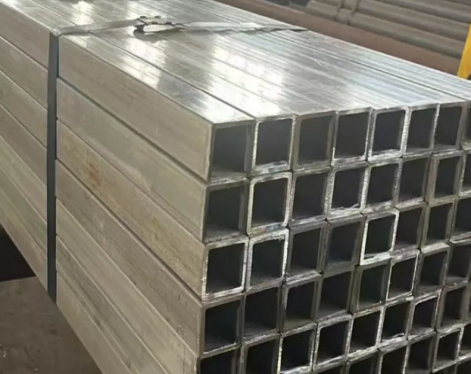
1. Hot-dip galvanized square tubes.
Hot-dip galvanized square tubes are made by rolling steel plates or strips into shape, welding them, and then immersing them in a hot-dip galvanizing bath for a series of chemical reactions. The production process is relatively simple and efficient, offering a wide variety of specifications. It requires less equipment and capital, making it suitable for small-scale galvanized square tube manufacturers. However, its strength is significantly lower than that of seamless square tubes.
2. Cold-dip galvanized square tubes.
Cold-dip galvanized square tubes utilize the principle of cold galvanizing to give them corrosion resistance. Unlike hot-dip galvanizing, cold-dip galvanizing coatings primarily rely on electrochemical principles for corrosion protection. Therefore, it is essential to ensure sufficient contact between the zinc powder and the steel to generate an electrode potential difference, making steel surface treatment crucial.
Galvanized square tube is a construction material with a wide range of applications. The galvanizing process involves applying a zinc coating to the square tube during production, an additional step compared to ordinary square tubes. This zinc coating effectively extends the service life of the square tube and significantly improves its corrosion resistance.
Main Materials of Galvanized Square Tubes
The basic material of galvanized square tubes is carbon steel or low-alloy structural steel. After forming, the performance is improved through a galvanizing process:1. Common Types of Steel Base Materials
Q195, Q235, Q345 series (Chinese national standard steel)
SS400, S235JR (European standard)
ASTM A36, ASTM A500 (American standard)
These steels possess good mechanical properties, weldability, and machinability, making them suitable for load-bearing components.
2. Galvanized Coating Material
The core of galvanized square tubes is the zinc (Zn) protective layer. The galvanized layer is evenly distributed, covering the entire surface of the steel tube, effectively isolating the steel from air and moisture corrosion, thus preventing rust.
Material properties of galvanized square tubes
Galvanizing provides stronger protection and corrosion resistance. The entire structure is composed of zinc, forming a dense quaternary crystal. This crystal forms a barrier on the steel plate, effectively preventing corrosive agents from penetrating. The corrosion resistance stems from the strong barrier protection function of zinc. When zinc acts as a sacrificial protector at cut edges, scratches, and areas where the coating is damaged, it forms an insoluble oxide layer, thus fulfilling its barrier protection function.Galvanizing offers superior protection and corrosion resistance. The entire structure is composed of zinc, forming a dense quaternary crystal. This crystal forms a barrier on the steel plate, effectively preventing corrosive agents from penetrating. The corrosion resistance stems from the strong barrier layer protection function of zinc. When zinc acts as a sacrificial protector at cut edges, scratches, and areas with coating abrasions, it forms an insoluble oxide layer, fulfilling its barrier protection function.
Galvanized square tubes are very common in our lives and widely used in many fields, such as power plants, agricultural and chemical machinery, glass curtain walls, automobile chassis, and airports. Galvanized square tubes offer stronger protection and corrosion resistance. There are two types of galvanized square tubes: cold-galvanized and hot-dip galvanized, each with different functions.
Classification of Galvanized Square Tubes
Galvanized square tubes are classified into hot-dip galvanized square tubes and cold-dip galvanized square tubes based on their manufacturing processes. These differences in processing result in numerous variations in their physical and chemical properties, including strength, toughness, and mechanical performance.1. Hot-dip galvanized square tubes.
Hot-dip galvanized square tubes are made by rolling steel plates or strips into shape, welding them, and then immersing them in a hot-dip galvanizing bath for a series of chemical reactions. The production process is relatively simple and efficient, offering a wide variety of specifications. It requires less equipment and capital, making it suitable for small-scale galvanized square tube manufacturers. However, its strength is significantly lower than that of seamless square tubes.
2. Cold-dip galvanized square tubes.
Cold-dip galvanized square tubes utilize the principle of cold galvanizing to give them corrosion resistance. Unlike hot-dip galvanizing, cold-dip galvanizing coatings primarily rely on electrochemical principles for corrosion protection. Therefore, it is essential to ensure sufficient contact between the zinc powder and the steel to generate an electrode potential difference, making steel surface treatment crucial.