In modern industrial systems, carbon steel plates are among the most widely used structural materials. Based on different rolling processes, carbon steel plates are divided into two main types: cold-rolled plates and hot-rolled plates. Although these two types of plates originate from the same source, they exhibit drastically different properties due to the difference in processing temperature.
Hot-rolled plates are formed at high temperatures (1100-1250℃), while cold-rolled plates are obtained by further processing hot-rolled steel strips at room temperature. This fundamental difference in processing technology determines their significant differences in performance, appearance, and application areas.
Because the hot rolling process takes place at high temperatures, the steel naturally shrinks during cooling, resulting in relatively lower dimensional accuracy. Simultaneously, a layer of oxide scale, also known as rolling scale, easily forms on the steel surface, making it appear rougher. The edges of hot-rolled steel are usually rounded, rather than the sharp, defined edges of cold-rolled steel.
Cold-rolled steel has a smooth, fine surface, stricter control over thickness and width tolerances, and sharp, clean edges, making it ideal for applications requiring high precision and aesthetics. Compared to hot-rolled steel, cold-rolled steel typically offers approximately 20% higher strength and hardness, but with relatively lower ductility.
The main differences are reflected in the following aspects: processing, price, deformation, strength, and surface quality.
1. Production Process Comparison
Hot-rolled carbon steel sheet production begins with heating steel ingots or continuously cast billets. These billets are first heated to a high temperature of 1100-1250℃ in a walking beam furnace, and then surface oxides are removed by high-pressure water descaling.
After continuous rolling in roughing and finishing mills, the final product is coiled into a straight coil through laminar flow cooling. This high-temperature rolling process effectively alters the metal grain structure, eliminates internal defects, and makes the steel easier to form.
Cold-rolled carbon steel sheet is a further processing of hot-rolled coils. It uses ordinary carbon structural steel hot-rolled strip as raw material and further rolls it at room temperature to produce steel sheets with a thickness typically less than 4mm. Because it is rolled at room temperature, no iron oxide scale is produced, resulting in good surface quality and high dimensional accuracy. After cold rolling, annealing is usually performed to adjust its mechanical and processing properties.
2.Price
Hot-rolled steel has a relatively simple production process with fewer processing steps, lower energy consumption, and lower labor costs, making it more competitively priced and suitable for high-volume and cost-sensitive projects.
Cold-rolled steel requires additional cold rolling, annealing, and surface treatment processes, resulting in a longer production cycle and higher manufacturing costs. Therefore, its market price is generally higher than that of hot-rolled steel.
3. Differences in Surface Properties
From an appearance standpoint, these two types of steel sheets are clearly different. Cold-rolled carbon steel sheets have a certain gloss and a smooth feel, similar to a common steel cup. Because they do not produce iron oxide scale, cold-rolled sheets have good surface quality and high dimensional accuracy.In contrast, hot-rolled sheets, if not pickled, resemble ordinary steel sheets. Unrusted surfaces are purplish-black (iron oxide scale), while rusted surfaces are red. Hot-rolled sheets have oxide scale on their surface, which typically varies in thickness, resulting in poorer appearance and surface flatness.
4. Comparison of Mechanical Properties
In terms of mechanical properties, both types of sheet metal have their advantages. Cold-rolled sheet undergoes work hardening during cold rolling, resulting in higher strength and hardness, but lower toughness. Cold-rolled sheet also has a lower yield point, a wider range of stamping plasticity, and better shape stability.Hot-rolled sheet, on the other hand, has lower hardness, is easier to process, and has good ductility. Hot-rolled sheet has good plasticity, but its mechanical properties are generally inferior to those of cold-rolled sheet.
5. Application Area Selection
Based on their different characteristics, these two types of steel sheets have clearly distinct application areas. Cold-rolled carbon steel sheets have a wide range of applications, suitable for industries such as automobile manufacturing, electrical products, locomotives and rolling stock, aerospace, precision instruments, and food canning. Especially in the home appliance manufacturing sector, cold-rolled sheets have gradually replaced hot-rolled thin steel sheets.
Hot-rolled carbon steel sheets are mainly used in steel structures, bridges, and vehicle manufacturing. In automobile manufacturing, hot-rolled sheets are primarily used for longitudinal beams, cross beams, and various supports in vehicle frames, as well as for stamping wheel rims, discs, and other components requiring a certain strength.
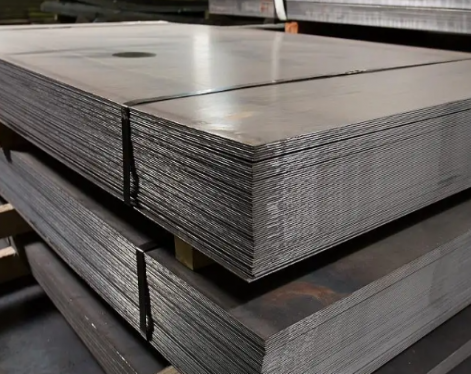
Common applications include:
Building structural components such as I-beams, channel steel, angle steel, and steel columns
Manufacturing of large components and profiles, such as railway tracks and automobile frames
Engineering projects with less stringent requirements for surface finish and dimensional tolerances
Welded structures for machinery, trailers, and industrial frames
As a base material for further processing (forging, welding, or machining)
Agricultural equipment and heavy machinery components
Steel products requiring subsequent coating or further processing
Hot-rolled plates are formed at high temperatures (1100-1250℃), while cold-rolled plates are obtained by further processing hot-rolled steel strips at room temperature. This fundamental difference in processing technology determines their significant differences in performance, appearance, and application areas.
What is hot-rolled steel?
Hot-rolled steel refers to steel that has been rolled at high temperatures, typically above the recrystallization temperature of the steel, approximately 1,700°F (about 927°C). Within this temperature range, the steel exhibits good ductility and plasticity, making it easier to roll into various shapes and sizes, such as sections, plates, and strips.Because the hot rolling process takes place at high temperatures, the steel naturally shrinks during cooling, resulting in relatively lower dimensional accuracy. Simultaneously, a layer of oxide scale, also known as rolling scale, easily forms on the steel surface, making it appear rougher. The edges of hot-rolled steel are usually rounded, rather than the sharp, defined edges of cold-rolled steel.
What is cold-rolled steel?
Cold-rolled steel is a type of steel produced by further processing hot-rolled steel using a cold rolling mill at room temperature or near room temperature. Due to deformation at low temperatures, the steel undergoes strain hardening, significantly improving its strength, hardness, and dimensional accuracy.Cold-rolled steel has a smooth, fine surface, stricter control over thickness and width tolerances, and sharp, clean edges, making it ideal for applications requiring high precision and aesthetics. Compared to hot-rolled steel, cold-rolled steel typically offers approximately 20% higher strength and hardness, but with relatively lower ductility.
The main differences between hot-rolled and cold-rolled steel
The fundamental difference between hot-rolled and cold-rolled steel lies in their processing technology and the resulting performance differences. Hot-rolled steel is produced at high temperatures, making it easier to shape, but resulting in lower precision and surface quality. Cold-rolled steel, on the other hand, undergoes low-temperature processing after hot rolling, resulting in higher strength, better surface finish, and higher dimensional accuracy.The main differences are reflected in the following aspects: processing, price, deformation, strength, and surface quality.
1. Production Process Comparison
Hot-rolled carbon steel sheet production begins with heating steel ingots or continuously cast billets. These billets are first heated to a high temperature of 1100-1250℃ in a walking beam furnace, and then surface oxides are removed by high-pressure water descaling.
After continuous rolling in roughing and finishing mills, the final product is coiled into a straight coil through laminar flow cooling. This high-temperature rolling process effectively alters the metal grain structure, eliminates internal defects, and makes the steel easier to form.
Cold-rolled carbon steel sheet is a further processing of hot-rolled coils. It uses ordinary carbon structural steel hot-rolled strip as raw material and further rolls it at room temperature to produce steel sheets with a thickness typically less than 4mm. Because it is rolled at room temperature, no iron oxide scale is produced, resulting in good surface quality and high dimensional accuracy. After cold rolling, annealing is usually performed to adjust its mechanical and processing properties.
2.Price
Hot-rolled steel has a relatively simple production process with fewer processing steps, lower energy consumption, and lower labor costs, making it more competitively priced and suitable for high-volume and cost-sensitive projects.
Cold-rolled steel requires additional cold rolling, annealing, and surface treatment processes, resulting in a longer production cycle and higher manufacturing costs. Therefore, its market price is generally higher than that of hot-rolled steel.
3. Differences in Surface Properties
From an appearance standpoint, these two types of steel sheets are clearly different. Cold-rolled carbon steel sheets have a certain gloss and a smooth feel, similar to a common steel cup. Because they do not produce iron oxide scale, cold-rolled sheets have good surface quality and high dimensional accuracy.In contrast, hot-rolled sheets, if not pickled, resemble ordinary steel sheets. Unrusted surfaces are purplish-black (iron oxide scale), while rusted surfaces are red. Hot-rolled sheets have oxide scale on their surface, which typically varies in thickness, resulting in poorer appearance and surface flatness.
4. Comparison of Mechanical Properties
In terms of mechanical properties, both types of sheet metal have their advantages. Cold-rolled sheet undergoes work hardening during cold rolling, resulting in higher strength and hardness, but lower toughness. Cold-rolled sheet also has a lower yield point, a wider range of stamping plasticity, and better shape stability.Hot-rolled sheet, on the other hand, has lower hardness, is easier to process, and has good ductility. Hot-rolled sheet has good plasticity, but its mechanical properties are generally inferior to those of cold-rolled sheet.
5. Application Area Selection
Based on their different characteristics, these two types of steel sheets have clearly distinct application areas. Cold-rolled carbon steel sheets have a wide range of applications, suitable for industries such as automobile manufacturing, electrical products, locomotives and rolling stock, aerospace, precision instruments, and food canning. Especially in the home appliance manufacturing sector, cold-rolled sheets have gradually replaced hot-rolled thin steel sheets.
Hot-rolled carbon steel sheets are mainly used in steel structures, bridges, and vehicle manufacturing. In automobile manufacturing, hot-rolled sheets are primarily used for longitudinal beams, cross beams, and various supports in vehicle frames, as well as for stamping wheel rims, discs, and other components requiring a certain strength.
When to Choose Hot-Rolled Steel?
Hot-rolled steel is an ideal choice when projects prioritize cost, structural strength, and processing flexibility, with less stringent requirements for appearance and dimensional accuracy. Hot-rolled steel is widely used in construction, infrastructure, and heavy manufacturing.Common applications include:
Building structural components such as I-beams, channel steel, angle steel, and steel columns
Manufacturing of large components and profiles, such as railway tracks and automobile frames
Engineering projects with less stringent requirements for surface finish and dimensional tolerances
Welded structures for machinery, trailers, and industrial frames
As a base material for further processing (forging, welding, or machining)
Agricultural equipment and heavy machinery components
Steel products requiring subsequent coating or further processing
Previous:What is 321 Stainless Steel plate?