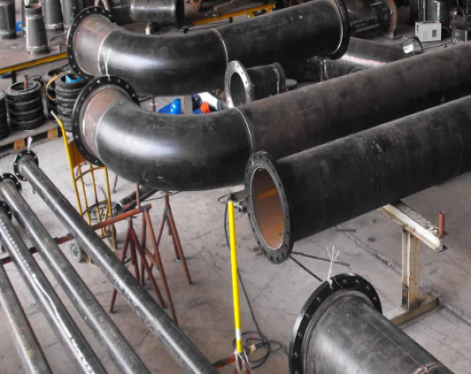
Seamless steel pipes are hollow steel products widely used for transporting fluids such as oil, natural gas, water, steam, and gas. Thanks to their high strength, excellent pressure resistance, and good bending performance, they are also commonly used in mechanical manufacturing, engineering structures, boilers, petroleum equipment, and industrial piping systems.
Compared with solid steel bars of the same cross-sectional area, seamless steel pipes offer lighter weight while maintaining strong mechanical properties. This makes them an essential material in construction, energy, petrochemical, and machinery industries.
This manufacturing method is suitable for producing large-diameter and thick-wall steel pipes with excellent mechanical strength and pressure resistance. Hot-rolled pipes are widely used in oil and gas transportation, boiler systems, structural engineering, and high-temperature industrial applications.
In the production of high-alloy steel pipes and special metal tubes, extrusion technology is also commonly used to improve dimensional accuracy and material performance.
Welded pipes are manufactured by bending steel plates or steel strips into a tubular shape and then joining the edges through welding processes such as ERW (Electric Resistance Welding) or submerged arc welding.
The production process mainly includes:
Steel strip forming
Welding
Heat treatment
Sizing and finishing
Modern welding technology has significantly improved weld quality and reduced differences between the weld seam and the base metal. As a result, welded steel pipes are now widely used in water pipelines, oil transportation, structural applications, boiler tubes, and industrial fluid systems.
Compared with seamless steel pipes, welded pipes offer:
Higher production efficiency
Lower manufacturing cost
Better material utilization
Large-scale continuous production capability
With advances in welding and post-weld heat treatment technology, welded pipes have gradually replaced some seamless pipe applications in recent years.
Cold drawing
Cold rolling
Cold tension reduction
Cold spinning
Cold working improves dimensional precision, surface finish, and mechanical performance. These pipes are commonly used in precision machinery, hydraulic systems, automotive components, and high-precision engineering applications.
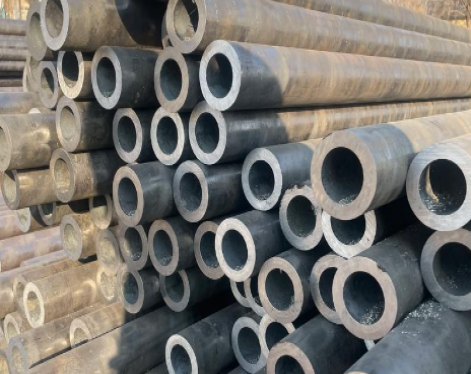
Conclusion
Steel pipes can be classified into hot-rolled seamless pipes, welded pipes, and cold-worked pipes according to their production methods. Each type offers different advantages in terms of strength, precision, cost, and manufacturing efficiency.
Hot-rolled seamless steel pipes are preferred for high-pressure and heavy-duty applications, welded steel pipes are widely used for cost-effective transportation systems, while cold-worked steel pipes are ideal for precision engineering and high-performance industrial equipment.
Choosing the right type of steel pipe depends on factors such as operating pressure, dimensional accuracy, application environment, and project budget.
Compared with solid steel bars of the same cross-sectional area, seamless steel pipes offer lighter weight while maintaining strong mechanical properties. This makes them an essential material in construction, energy, petrochemical, and machinery industries.
Main Classification of Seamless Steel Pipes by Production Method
According to different manufacturing processes, steel pipes can generally be divided into three main categories:Hot-Rolled Seamless Steel Pipe
Hot-rolled seamless steel pipes are produced by heating solid steel billets or ingots and then piercing and rolling them into hollow tubes. The main production steps include billet heating, piercing, rolling, sizing, and cooling.This manufacturing method is suitable for producing large-diameter and thick-wall steel pipes with excellent mechanical strength and pressure resistance. Hot-rolled pipes are widely used in oil and gas transportation, boiler systems, structural engineering, and high-temperature industrial applications.
In the production of high-alloy steel pipes and special metal tubes, extrusion technology is also commonly used to improve dimensional accuracy and material performance.
Welded Steel Pipe
Although welded steel pipes are different from true seamless pipes, they are an important category in steel pipe manufacturing and are often compared together in industrial applications.Welded pipes are manufactured by bending steel plates or steel strips into a tubular shape and then joining the edges through welding processes such as ERW (Electric Resistance Welding) or submerged arc welding.
The production process mainly includes:
Steel strip forming
Welding
Heat treatment
Sizing and finishing
Modern welding technology has significantly improved weld quality and reduced differences between the weld seam and the base metal. As a result, welded steel pipes are now widely used in water pipelines, oil transportation, structural applications, boiler tubes, and industrial fluid systems.
Compared with seamless steel pipes, welded pipes offer:
Higher production efficiency
Lower manufacturing cost
Better material utilization
Large-scale continuous production capability
With advances in welding and post-weld heat treatment technology, welded pipes have gradually replaced some seamless pipe applications in recent years.
Cold-Worked Steel Pipe
Cold-worked steel pipes are produced through secondary processing of steel pipes at room temperature. Common cold-working methods include:Cold drawing
Cold rolling
Cold tension reduction
Cold spinning
Cold working improves dimensional precision, surface finish, and mechanical performance. These pipes are commonly used in precision machinery, hydraulic systems, automotive components, and high-precision engineering applications.
Difference Between Hot-Rolled, Welded, and Cold-Worked Steel Pipes
| Type | Manufacturing Process | Main Advantages | Common Applications |
| Hot-Rolled Seamless Pipe | Piercing and rolling heated billets | High strength and pressure resistance | Oil, gas, boilers, construction |
| Welded Steel Pipe | Forming and welding steel strips | Low cost and high efficiency | Water pipelines, structural systems |
| Cold-Worked Steel Pipe | Secondary cold processing | High precision and smooth finish | Hydraulic systems, automotive parts |
Conclusion
Steel pipes can be classified into hot-rolled seamless pipes, welded pipes, and cold-worked pipes according to their production methods. Each type offers different advantages in terms of strength, precision, cost, and manufacturing efficiency.
Hot-rolled seamless steel pipes are preferred for high-pressure and heavy-duty applications, welded steel pipes are widely used for cost-effective transportation systems, while cold-worked steel pipes are ideal for precision engineering and high-performance industrial equipment.
Choosing the right type of steel pipe depends on factors such as operating pressure, dimensional accuracy, application environment, and project budget.