Galvanized pipe is one of the most widely used steel pipe products in building, water supply, fire protection, agricultural, and industrial piping systems. For many newcomers to decoration, construction, or DIY building, the technical terms like "Q235," "DN25," "4-point," and "Sch40" used by vendors can often leave them confused. However, understanding galvanized pipe isn't difficult. Today, we'll focus on the two core aspects that everyone cares about most: "material" and "size," using the simplest language to guide you through the ins and outs of galvanized pipe.
Galvanized pipes are commonly divided into:
Hot-dip galvanized steel pipe
Pre-galvanized steel pipe
Electro-galvanized steel pipe
Q195 / Q215: These are basic carbon structural steels. "Q" represents yield strength, and "195" means the yield strength is approximately 195 MPa. This type of material has good plasticity and high flexibility, and is typically used to manufacture small-diameter household conduits or low-pressure fluid pipes where high strength is not required.
Q235: This is the absolute mainstay of the galvanized pipe family (commonly known as A3 steel). Its comprehensive performance is very balanced, with moderate strength and excellent weldability, meeting the needs of most construction and engineering projects. Scaffolding, guardrails, and conventional water and gas pipes are basically made of Q235.
Q345 (16Mn): This belongs to low-alloy high-strength steel, with a yield strength reaching 345 MPa. If your project requires high pressure, heavy loads, or operation in frigid environments, choosing Q345 galvanized pipes will be a more reliable and stable choice.
Internationally recognized materials: such as ASTM A53 Gr.B (American Standard) and JIS G3444 STK400 (Japanese Standard), are typically used in export projects or projects with specific international standard requirements.
ASTM A53 Galvanized Pipe:ASTM A53 is one of the most common standards for galvanized steel pipes used in structural and fluid transportation applications.
ASTM A106 Galvanized Pipe:ASTM A106 is mainly used for high-temperature and pressure applications. Although it is usually supplied as black steel pipe, it can also be galvanized for additional corrosion protection.
Pipe wall thickness is generally classified by schedule numbers.
Common Pipe Schedules
Galvanized pipes are usually made from carbon steel such as ASTM A53, Q235, or Q355 steel grades.
What is the standard size of galvanized pipe?
Common sizes range from 1/2 inch to 12 inches, depending on industrial requirements.
Is galvanized pipe suitable for drinking water?
Galvanized pipe was historically used for water supply systems, but modern plumbing often prefers copper or PEX due to potential mineral buildup.
What is the most common galvanized pipe schedule?
SCH 40 is the most widely used galvanized pipe wall thickness for general applications.
How long does galvanized pipe last?
Hot-dip galvanized steel pipes can last 40–50 years or longer under normal environmental conditions.
What is galvanized pipe?
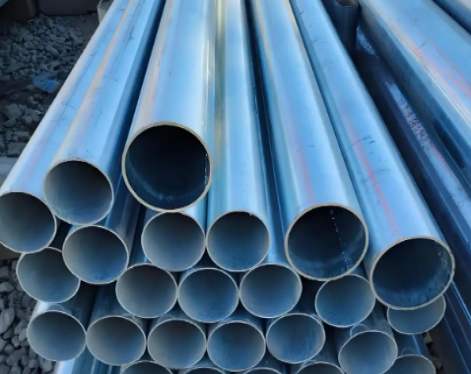
Simply put: A galvanized pipe is a steel pipe with a layer of zinc coated on its surface. Its core function is rust and corrosion prevention. There are two types: hot-dip galvanizing and cold-dip galvanizing.Galvanized pipes are commonly divided into:
Hot-dip galvanized steel pipe
Pre-galvanized steel pipe
Electro-galvanized steel pipe
What are the materials used in galvanized pipes?
The inner core of galvanized pipes is usually low-carbon steel or low-alloy steel. Different steel grades determine the strength and pressure resistance of the pipe. The most common materials used domestically and internationally include:Q195 / Q215: These are basic carbon structural steels. "Q" represents yield strength, and "195" means the yield strength is approximately 195 MPa. This type of material has good plasticity and high flexibility, and is typically used to manufacture small-diameter household conduits or low-pressure fluid pipes where high strength is not required.
Q235: This is the absolute mainstay of the galvanized pipe family (commonly known as A3 steel). Its comprehensive performance is very balanced, with moderate strength and excellent weldability, meeting the needs of most construction and engineering projects. Scaffolding, guardrails, and conventional water and gas pipes are basically made of Q235.
Q345 (16Mn): This belongs to low-alloy high-strength steel, with a yield strength reaching 345 MPa. If your project requires high pressure, heavy loads, or operation in frigid environments, choosing Q345 galvanized pipes will be a more reliable and stable choice.
Internationally recognized materials: such as ASTM A53 Gr.B (American Standard) and JIS G3444 STK400 (Japanese Standard), are typically used in export projects or projects with specific international standard requirements.
ASTM A53 Galvanized Pipe:ASTM A53 is one of the most common standards for galvanized steel pipes used in structural and fluid transportation applications.
ASTM A106 Galvanized Pipe:ASTM A106 is mainly used for high-temperature and pressure applications. Although it is usually supplied as black steel pipe, it can also be galvanized for additional corrosion protection.
Standard Sizes of Galvanized Pipes
Galvanized steel pipes are available in a wide range of sizes to meet different industrial and commercial requirements.| DN | O.D. | W.T. | |||||||||||||||
| Inch | mm | SCH5S | SCH10S | SCH10 | SCH20 | SCH30 | SCH40 | SCH60 | SCH80 | SCH100 | SCH120 | SCH140 | SCH160 | Sth | XS | XXS | |
| 50 | 2″ | 60.3 | 1.65 | 2.77 | – | – | – | 3.91 | – | 5.54 | – | – | – | 8.74 | 3.91 | 5.54 | 11.07 |
| 65 | 2 1/2″ | 73 | 2.11 | 3.05 | – | – | – | 5.16 | – | 7.01 | – | – | – | 9.53 | 5.16 | 7.01 | 14.02 |
| 80 | 3″ | 88.9 | 2.11 | 3.05 | – | – | – | 5.49 | – | 7.62 | – | – | – | 11.13 | 5.49 | 7.52 | 15.24 |
| 90 | 3 1/2″ | 101.6 | 2.11 | 3.05 | – | – | – | 5.74 | – | 8.08 | – | – | – | – | 5.74 | 8.08 | – |
| 100 | 4″ | 114.3 | 2.11 | 3.05 | – | – | – | 6.02 | – | 8.58 | – | 11.13 | – | 13.49 | 6.02 | 8.56 | 17.12 |
| 125 | 5″ | 141.3 | 2.77 | 3.4 | – | – | – | 6.55 | – | 9.53 | – | 12.7 | – | 15.88 | 6.55 | 9.53 | 18.05 |
| 150 | 6″ | 168.3 | 2.77 | 3.4 | – | – | – | 7.11 | – | 10.97 | – | 14.27 | – | 18.26 | 7.11 | 10.97 | 21.95 |
| 200 | 8″ | 219.1 | 2.77 | 3.76 | – | 6.35 | 7.04 | 8.18 | 10.31 | 12.7 | 15.09 | 18.26 | 20.62 | 23.01 | 8.18 | 12.7 | 22.23 |
| 250 | 10″ | 273.1 | 3.4 | 4.19 | – | 6.35 | 7.8 | 9.27 | 12.7 | 15.09 | 18.26 | 21.44 | 25.4 | 28.58 | 9.27 | 12.7 | 25.4 |
| 300 | 12″ | 323.9 | 3.96 | 4.57 | – | 6.35 | 8.38 | 10.31 | 14.27 | 17.48 | 21.44 | 25.4 | 28.58 | 33.32 | 9.53 | 12.7 | 25.4 |
| 350 | 14″ | 355.5 | 3.96 | 4.78 | 6.35 | 7.92 | 9.53 | 11.13 | 15.09 | 19.05 | 23.83 | 27.79 | 31.75 | 35.71 | 9.53 | 12.7 | – |
| 400 | 16″ | 406.4 | 4.19 | 4.78 | 6.35 | 7.92 | 9.53 | 12.7 | 16.66 | 21.44 | 26.19 | 30.96 | 36.53 | 40.49 | 9.53 | 12.7 | – |
| 450 | 18″ | 457.2 | 4.19 | 4.78 | 6.35 | 7.92 | 11.13 | 14.27 | 19.05 | 23.83 | 39.36 | 34.93 | 39.67 | 45.24 | – | – | – |
| 500 | 20″ | 508 | 4.78 | 5.54 | 6.35 | 9.53 | 12.7 | 15.09 | 20.62 | 26.19 | 32.54 | 38.1 | 44.45 | 50.01 | – | – | – |
| 550 | 22″ | 558.8 | 4.78 | 5.54 | 6.35 | 9.53 | 12.7 | – | 22.23 | 28.58 | 34.93 | 41.28 | 47.63 | 53.98 | – | – | – |
| 600 | 24″ | 609.6 | 5.54 | 6.35 | 6.35 | 9.53 | 14.27 | 17.48 | 24.61 | 30.96 | 38.89 | 46.02 | 52.37 | 59.54 | – | – | – |
Galvanized Pipe Wall Thickness
Pipe wall thickness is generally classified by schedule numbers.Common Pipe Schedules
| Schedule | Features |
| SCH 10 | Thin wall, lightweight |
| SCH 40 | Standard wall thickness |
| SCH 80 | Thick wall, high pressure |
| SCH 160 | Extra heavy wall |
FAQs About Material and Size of Galvanized Pipe
What material is galvanized pipe made from?Galvanized pipes are usually made from carbon steel such as ASTM A53, Q235, or Q355 steel grades.
What is the standard size of galvanized pipe?
Common sizes range from 1/2 inch to 12 inches, depending on industrial requirements.
Is galvanized pipe suitable for drinking water?
Galvanized pipe was historically used for water supply systems, but modern plumbing often prefers copper or PEX due to potential mineral buildup.
What is the most common galvanized pipe schedule?
SCH 40 is the most widely used galvanized pipe wall thickness for general applications.
How long does galvanized pipe last?
Hot-dip galvanized steel pipes can last 40–50 years or longer under normal environmental conditions.