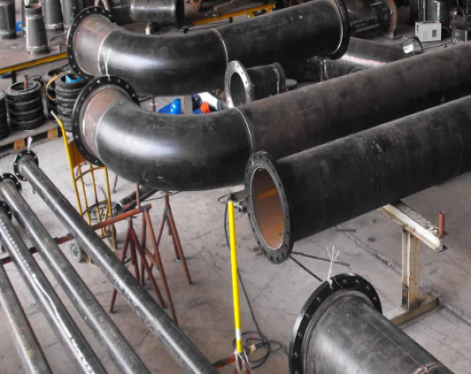
Stainless steel beams have high chromium content, giving them excellent corrosion resistance and a longer service life, making them ideal for harsh or humid environments. Mild steel beams contain low carbon steel, making them cheaper and easier to weld and fabricate, but they rust more easily without protective coating. Overall, stainless steel is used where durability and appearance matter, while mild steel is preferred for general construction due to cost efficiency.
1. Alloy Composition Difference
The most fundamental difference between mild steel and stainless steel beams is their chemical composition.Mild steel mainly consists of iron with a small amount of carbon, usually below 0.25%.This low carbon content makes it easy to form and fabricate, but limits corrosion resistance.
Stainless steel contains a higher level of chromium, typically above 10.5%, and often includes nickel or molybdenum.These elements form a passive protective layer that significantly improves durability and corrosion resistance in harsh environments.
2. Corrosion Resistance Performance
Corrosion resistance is the key performance gap between the two materials.Stainless steel is designed to resist rust through its chromium oxide layer, which automatically regenerates when scratched or damaged.This makes it highly suitable for coastal, marine, and chemical environments.
Mild steel, however, has no natural protective layer.Once exposed to moisture and oxygen, it begins to rust quickly unless surface treatments such as painting or galvanization are applied.Without protection, its lifespan is significantly reduced in outdoor conditions.
3. Strength, Weight, and Structural Behavior
Both materials offer reliable structural strength, but their performance differs under real conditions.Mild steel generally provides a good balance of strength and ductility at a lower cost, making it widely used in standard construction.
Stainless steel also offers high strength, but it is denser and heavier in comparison.This increased weight can impact transportation and installation, but it also contributes to better long-term stability in aggressive environments.
4. Fabrication and Workability
Mild steel is highly favored in fabrication due to its excellent malleability.It can be easily cut, welded, and shaped, which reduces labor time and overall project cost.
Stainless steel is more challenging to process.It requires controlled welding conditions and skilled workmanship to avoid damaging its corrosion-resistant properties.Improper fabrication can reduce performance and increase long-term maintenance risk.
5. Applications and Selection Guidance
Mild steel beams are widely used in residential buildings, warehouses, bridges, and general industrial structures where cost efficiency is important.They perform best in controlled or indoor environments where corrosion risk is low.
Stainless steel beams are preferred in chemical plants, coastal structures, food processing facilities, and architectural projects.They are ideal for environments where durability, hygiene, and long service life are critical.
Selecting the right material depends on environmental conditions, budget, and expected lifecycle performance rather than initial purchase cost alone.
What Is a Stainless Steel Beam?
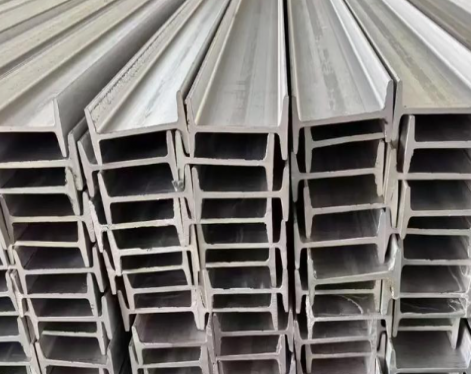
A stainless steel beam is made from an iron-based alloy with chromium content.Chromium forms a protective oxide layer on the surface.This layer helps prevent rust and corrosion in harsh environments. Stainless steel H-beam is a type of structural steel beam made from rolled steel. It has wide flanges that create a cross-section resembling an uppercase H and is used extensively in metal construction.
Mild Steel Beam
A mild steel beam is a structural element made from low-carbon steel (typically 0.05% to 0.25% carbon), widely used in construction and engineering for its balance of strength, ductility, and affordability. Frequently called MS Beams, universal beams, or RSJs (Rolled Steel Joists), these I- or H-shaped profiles are designed to support heavy loads in building frames, bridges, and industrial applications.Stainless Steel Beam vs Mild Steel Beam: Key Differences
| Feature | Stainless Steel Beam | Mild Steel Beam |
| Corrosion Resistance | Excellent | Low |
| Strength | High | Moderate to High |
| Cost | High | Low |
| Maintenance | Very low | High |
| Lifespan | Long | Medium |
| Weldability | Moderate | Excellent |
1. Alloy Composition Difference
The most fundamental difference between mild steel and stainless steel beams is their chemical composition.Mild steel mainly consists of iron with a small amount of carbon, usually below 0.25%.This low carbon content makes it easy to form and fabricate, but limits corrosion resistance.
Stainless steel contains a higher level of chromium, typically above 10.5%, and often includes nickel or molybdenum.These elements form a passive protective layer that significantly improves durability and corrosion resistance in harsh environments.
2. Corrosion Resistance Performance
Corrosion resistance is the key performance gap between the two materials.Stainless steel is designed to resist rust through its chromium oxide layer, which automatically regenerates when scratched or damaged.This makes it highly suitable for coastal, marine, and chemical environments.
Mild steel, however, has no natural protective layer.Once exposed to moisture and oxygen, it begins to rust quickly unless surface treatments such as painting or galvanization are applied.Without protection, its lifespan is significantly reduced in outdoor conditions.
3. Strength, Weight, and Structural Behavior
Both materials offer reliable structural strength, but their performance differs under real conditions.Mild steel generally provides a good balance of strength and ductility at a lower cost, making it widely used in standard construction.
Stainless steel also offers high strength, but it is denser and heavier in comparison.This increased weight can impact transportation and installation, but it also contributes to better long-term stability in aggressive environments.
4. Fabrication and Workability
Mild steel is highly favored in fabrication due to its excellent malleability.It can be easily cut, welded, and shaped, which reduces labor time and overall project cost.
Stainless steel is more challenging to process.It requires controlled welding conditions and skilled workmanship to avoid damaging its corrosion-resistant properties.Improper fabrication can reduce performance and increase long-term maintenance risk.
5. Applications and Selection Guidance
Mild steel beams are widely used in residential buildings, warehouses, bridges, and general industrial structures where cost efficiency is important.They perform best in controlled or indoor environments where corrosion risk is low.
Stainless steel beams are preferred in chemical plants, coastal structures, food processing facilities, and architectural projects.They are ideal for environments where durability, hygiene, and long service life are critical.
Selecting the right material depends on environmental conditions, budget, and expected lifecycle performance rather than initial purchase cost alone.