When brown rust spots appear on the surface of stainless steel pipes, people are often surprised, thinking, "Stainless steel doesn't rust; if it rusts, it's not stainless steel, and there might be a problem with the steel quality." In fact, this is a one-sided and incorrect view due to a lack of understanding of stainless steel. Stainless steel can rust under certain conditions.
Stainless steel has the ability to resist atmospheric oxidation—that is, it is rust-resistant—and also has the ability to resist corrosion in acidic, alkaline, and saline media. However, the degree of its corrosion resistance varies depending on its chemical composition, processing state, usage conditions, and the type of environmental medium. For example, 304 stainless steel pipes have excellent rust resistance in a dry and clean atmosphere, but when moved to a coastal area with a large amount of salt in the sea mist, they will quickly rust; while 316 stainless steel pipes perform well. Therefore, not all types of stainless steel are corrosion-resistant and rust-free in all environments.
Reasons for stainless steel pipe rusting:
1. The stainless steel surface has accumulated dust containing other metal elements or foreign metal particles. In humid air, the condensed water between the attachments and the stainless steel forms a micro-battery, triggering an electrochemical reaction, damaging the protective film, which is called electrochemical corrosion.2. Organic matter (such as fruit and vegetable juices, noodle soup, phlegm, etc.) adheres to the stainless steel surface. In the presence of water and oxygen, organic acids are formed, and over time, these organic acids corrode the metal surface.
3. Acidic, alkaline, or saline substances (such as alkaline water or lime water splashed from wall decoration) adhere to the stainless steel surface, causing localized corrosion.
4. In polluted air (such as an atmosphere containing a large amount of sulfides, carbon oxides, and nitrogen oxides), when condensation occurs, sulfuric acid, nitric acid, and acetic acid droplets are formed, causing chemical corrosion.
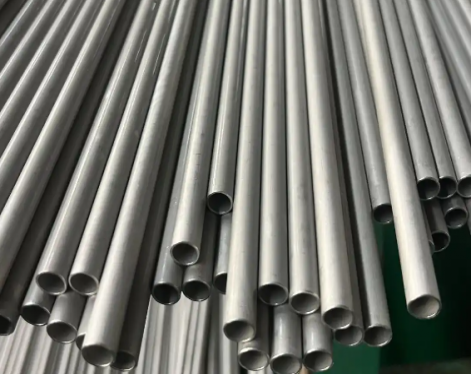
How to prevent stainless steel water pipes from rusting?
1. Choose products from reputable manufacturers. While there are many stainless steel pipe manufacturers, some smaller factories may not have strict quality control. Choosing products from major brands is more reliable! Shuiluo Pipe has 13 years of pipe manufacturing experience, is a large brand and manufacturer, uses steel from top domestic brands, and has complete quality inspection reports – it's trustworthy!2. Stainless steel pipes and fittings should be purchased from the same brand. Mixing products from different brands may lead to quality issues, such as rusting at the joints, making future claims difficult.
3. During transportation, rust in the truck's cargo compartment can cause friction with the pipes, damaging the protective oxide film on the pipe surface, which can lead to rusting later. Therefore, prioritize manufacturers with good pipe packaging, and pay attention to proper handling during transportation and lifting.
4. Improper storage location, such as placing pipes near volatile substances or failing to clean dust and oil stains promptly, can also cause stainless steel pipes to rust. Therefore, any stains on the pipe surface should be cleaned immediately!
5. Different regions require different pipe materials. In most inland areas, food-grade 304 stainless steel pipes are sufficient. However, in coastal areas such as Shenzhen, Xiamen, and Hainan, 316L is recommended. Coastal areas have higher salt content in the air, and 316L has better corrosion resistance than 304, making it less prone to rusting!